All posts by CavalrymanSteakhouse

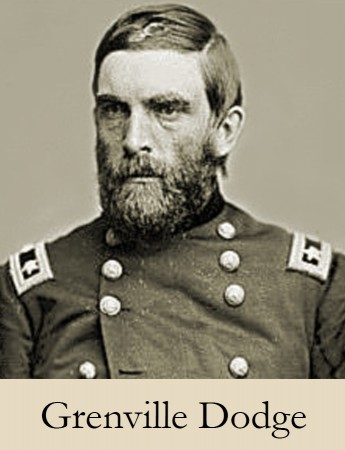
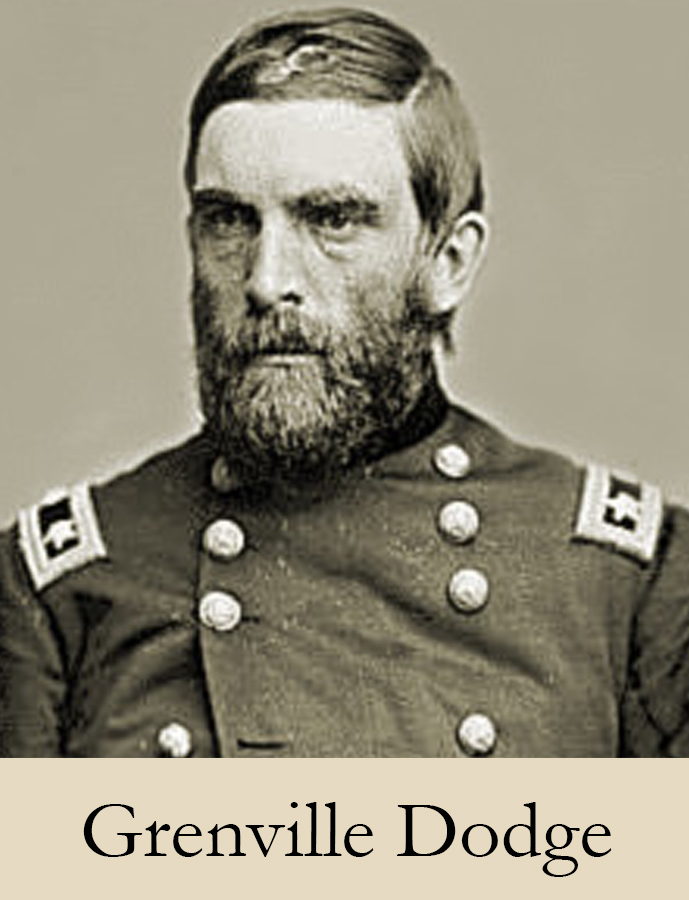
General Grenville Dodge

707-Dodge-Dura

General Grenville M. Dodge was the chief engineer and a driving force behind the construction of the Union Pacific Railroad.

A veteran of the Civil War, Major General Dodge was hired by financier Thomas Durant and was indispensable in this role. However, the project suffered due to Durant’s constant meddling and efforts to milk the construction process for his own personal profit. Dodge’s conflicts with Durant became well-known, yet he persisted in his mission to build a straight run of railroad track through Wyoming.

In 1866, General Dodge was elected to Congress in Iowa. He was criticized for neglecting his official duties in order to survey Wyoming Territory for the railroad, yet he spent much of his time on Capitol Hill lobbying on behalf of the Union Pacific.

Learn more about Grenville Dodge and the building of the Transcontinental Railroad. 
Resources

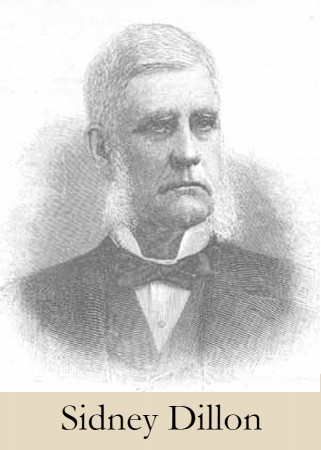
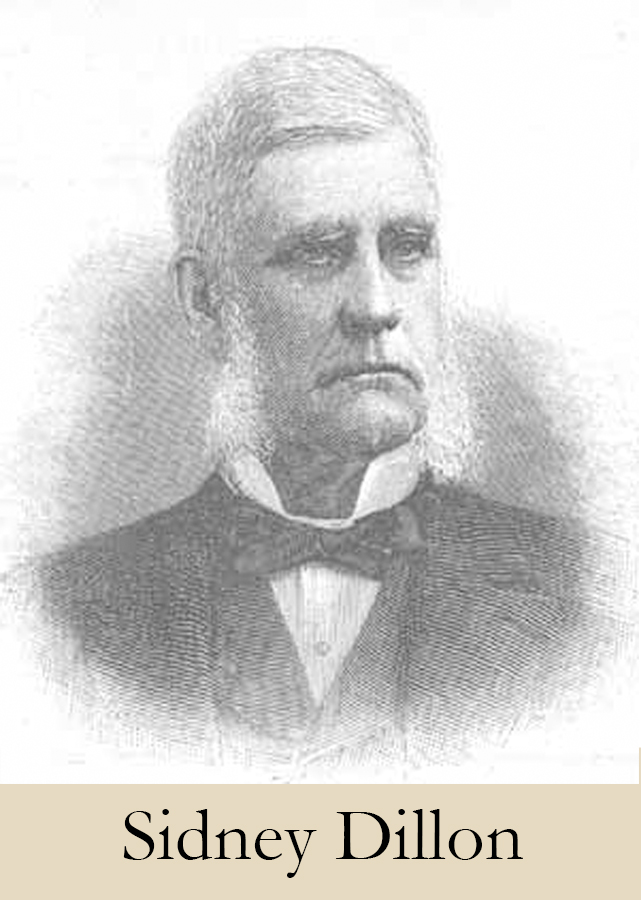
Sidney Dillon

705-Dillon-Dura

Sidney Dillon was one of America’s premier railroad builders and was involved in the construction of many railroads. His largest contract was made with the Union Pacific Railroad in 1865.

Dillon’s experience in the construction of railroads made him an invaluable member of the Union Pacific construction team. However, in 1865 he also became actively involved in an equity exchange with the Crédit Mobilier of America Corporation, created by Thomas C. Durant, vice president and general manager of Union Pacific. This scheme was set up to defraud taxpayers during the construction of the Transcontinental Railroad.

In spite of the ensuing scandal, Dillon served as President of the Union Pacific Railroad from 1874 – 1979, and again from 1890 – 1892.

Learn more about Sidney Dillon and the building of the Transcontinental Railroad.
Resources

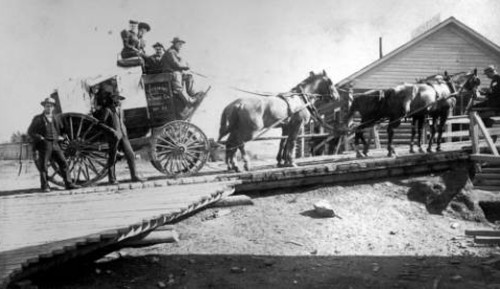
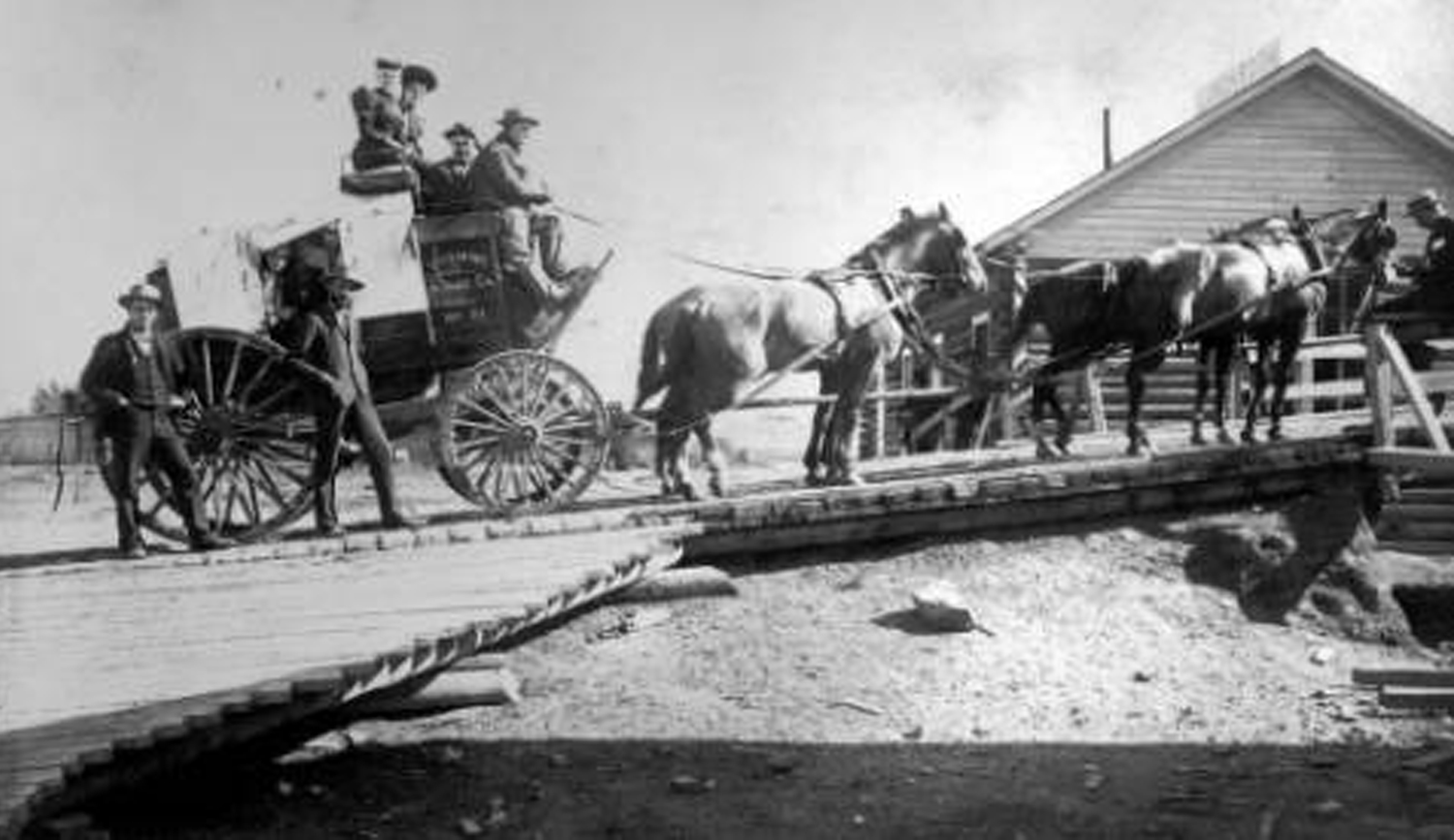
History of Fort Sanders and the Overland Stage

685-saratoga-stage-dura

 The Overland Trail was a stagecoach and wagon trail used as an alternative route to the Oregon, California, and Mormon trails through central Wyoming in the 1860s. The Overland Stage Company, owned by Ben Holladay, used the trail to run both mail and passengers to Salt Lake City.

With the onset of the Civil War, soldiers previously assigned to guard stage station property were unavailable to protect the trail against stock theft and harassment of passenger coaches. Holladay requested permission of the federal government for protection to move the stage line route further south into what is now southern Wyoming.

Col. William A. Collins, Army commander of the region, had few troops to spare other than the “galvanized Yankees” – former Confederate soldiers who had chosen to serve on the frontier as an alternative to prisoner-of-war camp – but his unit assisted successfully with moving the company’s equipment and personnel to a new route.

Eventually, Fort Collins, in Colorado, would be named for Col. Collins.

Learn more about the Overland Trail and Stage. 

Resources

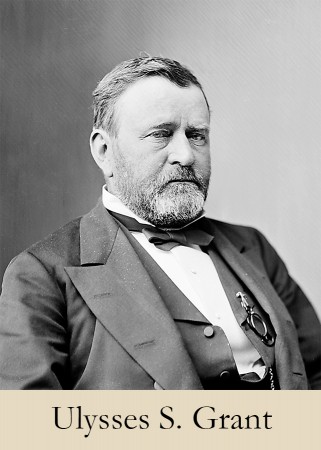
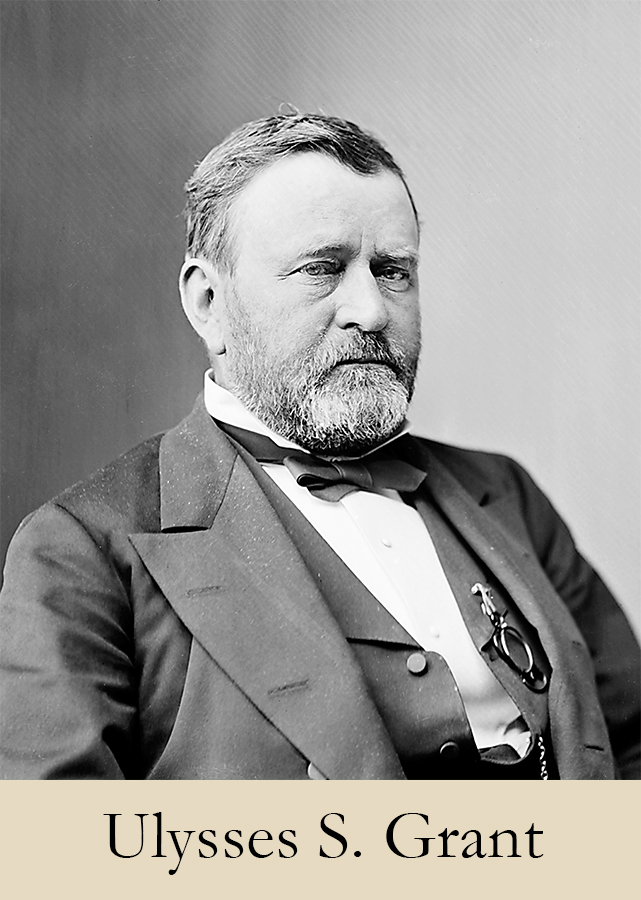
General Ulysses S. Grant

680-Grant-Dura-(1)

Ulysses S. Grant was a United States General and commander of the Union armies during the latter years of the Civil War. Serving under President Abraham Lincoln, he engineered a successful end to the Civil War in 1865.

In 1868, when a major dispute arose between Dr. Thomas Durant and General Dodge over the engineering of the Union Pacific Railroad, General Grant was called in as a mediator. He made it clear in the meeting that General Dodge was expected to be the chief engineer on the project.

Grant became the 18th president of the United States (1869–77).

Learn more about President Ulysses S. Grant. 

Resources

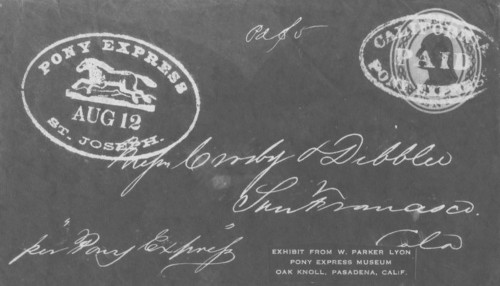
The Pony Express

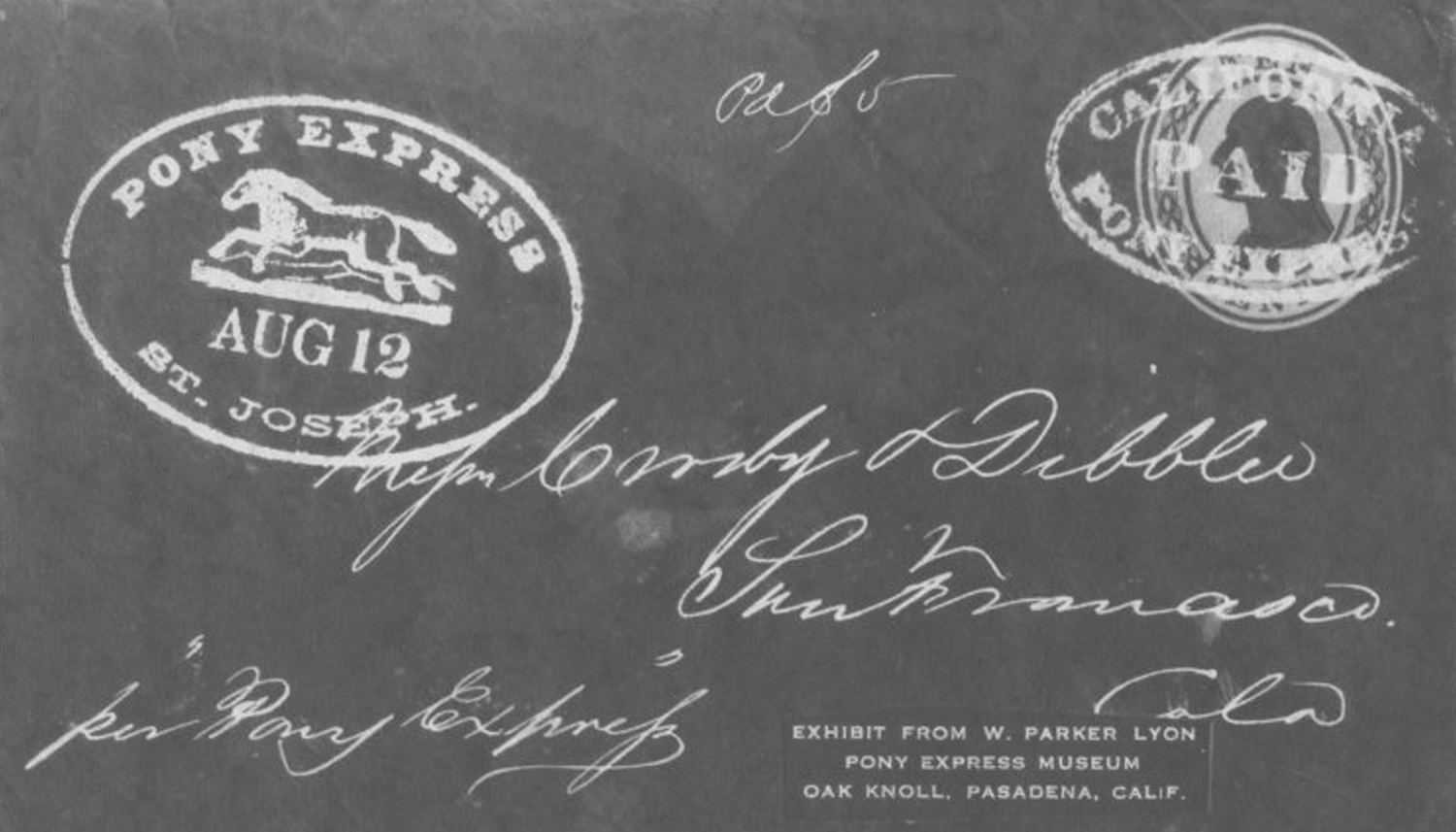
675-pony-express-envelope--dura

The Pony Express was a mail delivery service by horseback that used a series of relay stations operating from April 1860 to October 1861. The route began in St. Joseph, Missouri and traveled across the Great Plains, over the Rocky Mountains, running as far the Sierra Nevada and Sacramento, California. Founders William H. Russell, Alexander Majors, and William B. Waddell were all notable in the freighting business.

The Pony Express became the West’s most direct means of east–west communication before the telegraph was established, and was vital for tying the new state of California with the rest of the United States.

Learn more about the Pony Express. 

Resources

Fort Sanders Early Depiction

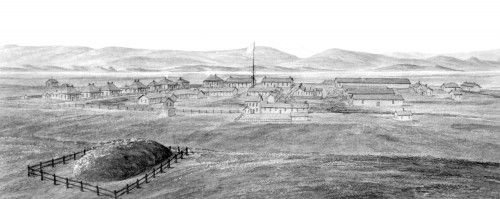
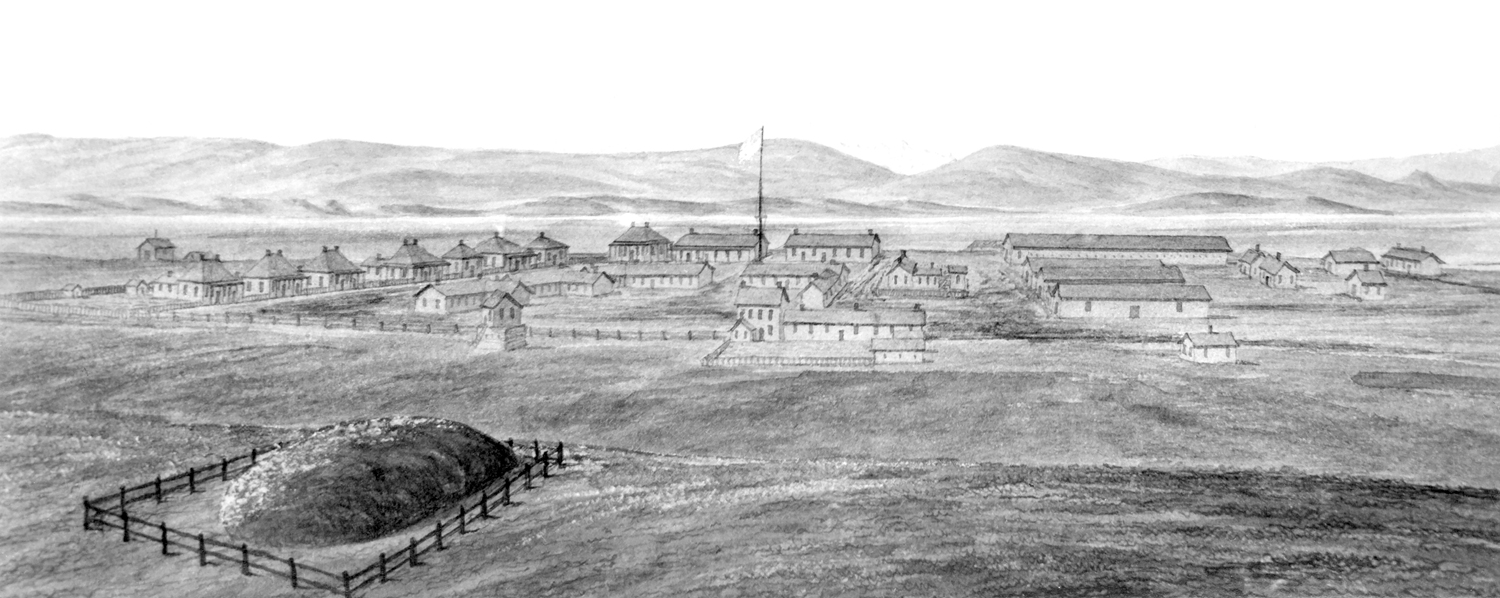
670-Ft-Sanders-WT---drawing-dura

An early depiction of Fort Sanders military fort.

The garrison at Fort Sanders frequently protected railroad crews from Indian attacks along the line over the Laramie Range and across the plains. Initially, Fort Sanders was the county seat for the original Laramie County (as created by the Dakota Territory), which was almost all of what later became the Wyoming Territory. On December 27, 1867, Dakota lawmakers moved the Laramie County seat to Cheyenne and created a new Carter County out of the western half.

Learn more about the history of Fort Sanders.

Resources

Fort Sanders Soldiers

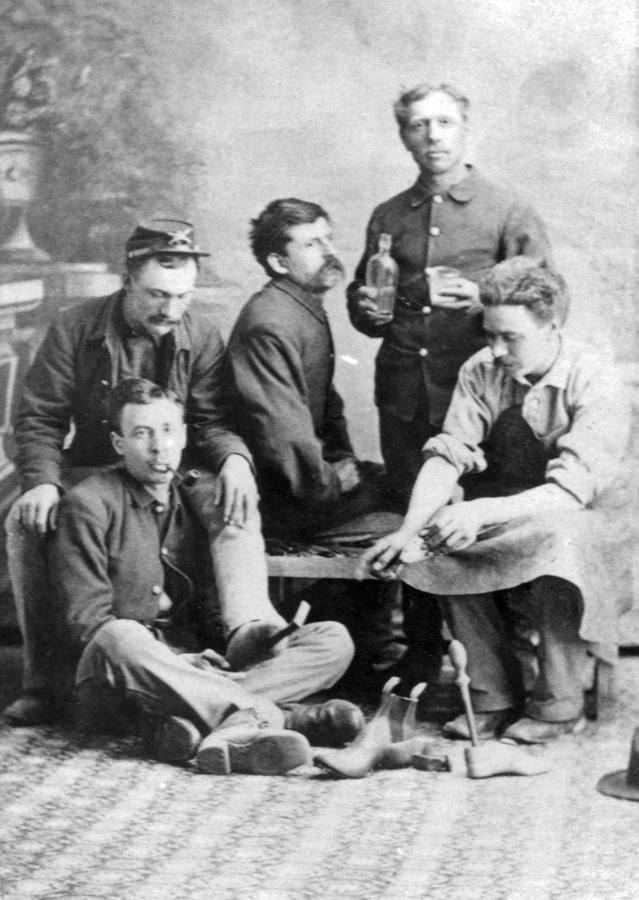
665--5-men-posing-for-photograph-in-studio,-Eugene-Issac-bootmaker-on-R,-Ft-Sanders-dura

Soldiers, such as these men serving at Fort Sanders near Laramie, were originally tasked with protecting travelers on the nearby Overland Trail from Native American attacks. Later, their primary duty became protecting the workers of the Union Pacific Railroad when it arrived in 1869.

Note the man on the right, who is a shoe cobbler depicted with some of his tools. This photo shows a bit of everyday life at Fort Sanders and highlights the need for craftsmen and merchants at the fort.

Learn more about the history of Fort Sanders.

Resources

Mess Time

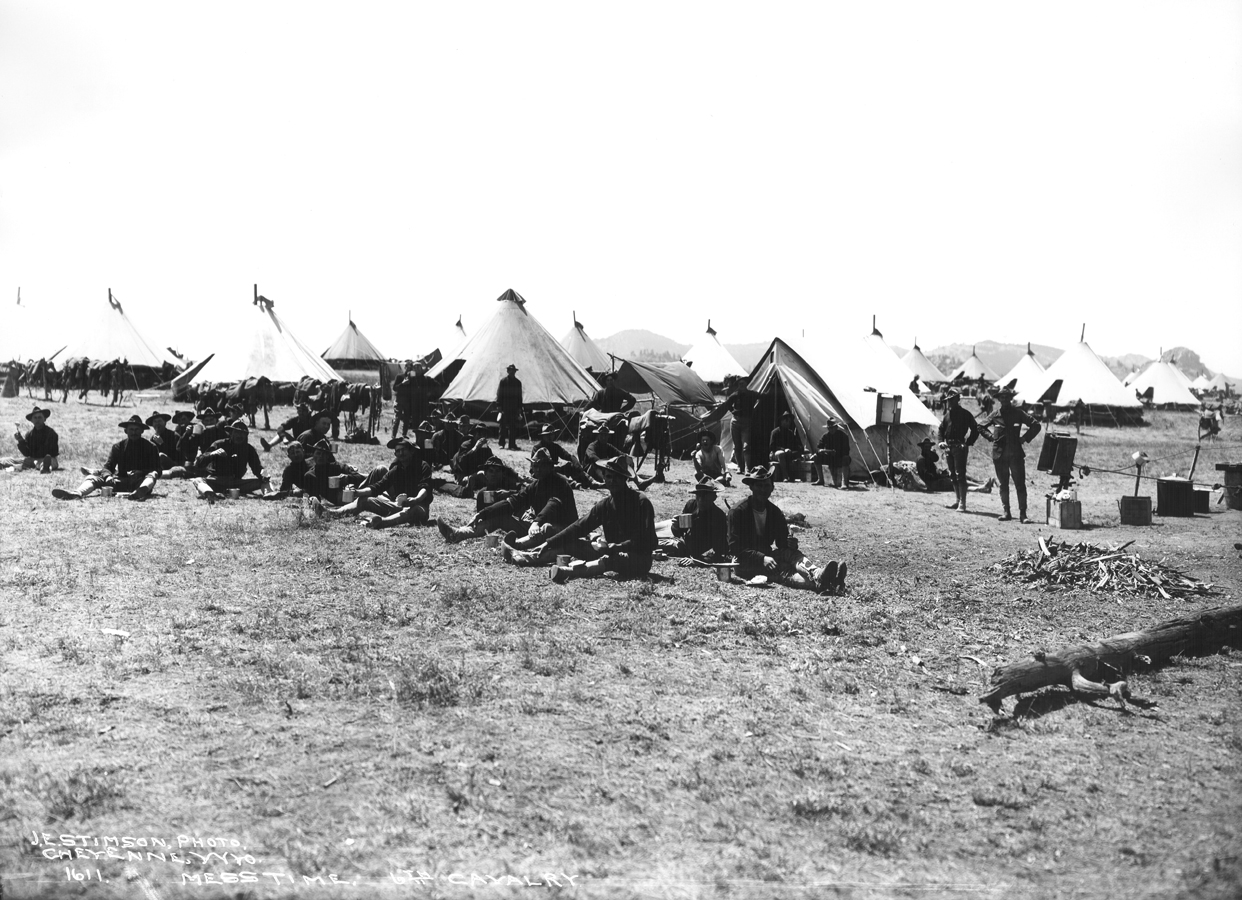
660-Stimson-Neg-1611,-Mess-time,-6th-Cavalry-dura

Photo by Joseph “J.E.” Stimson. 

This photo shows men at mess time and was likely taken sometime in the early 1900s by photographer Joseph Stimson after Fort Sanders had been dis-established.

In 1901, Stimson was hired as a publicity photographer for the Union Pacific Railroad to help change the image of the scandal-plagued railroad. Stimson was given free rein to photograph anything that might draw investors to the railway.

Learn more about photographer J.E. Stimson.

Resources