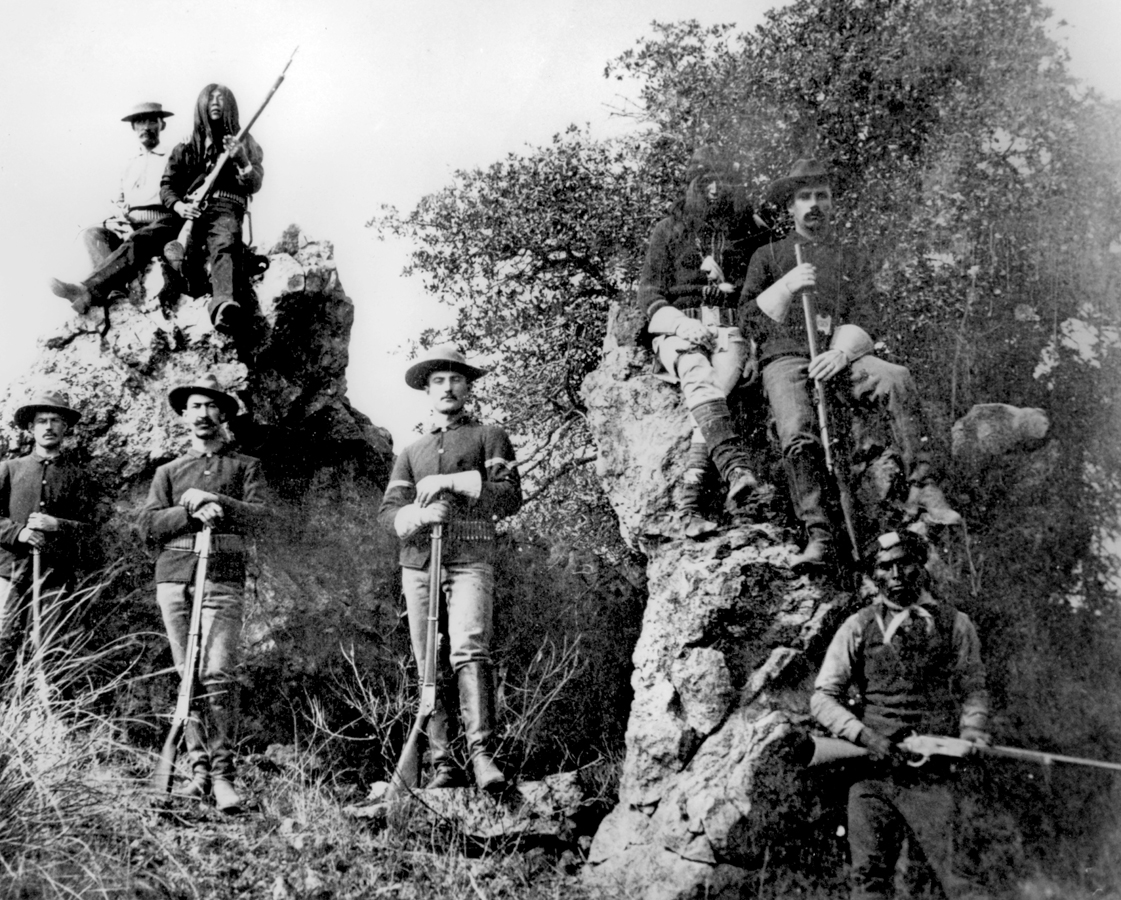
Cavalrymen in the field, likely with an Apache scout.
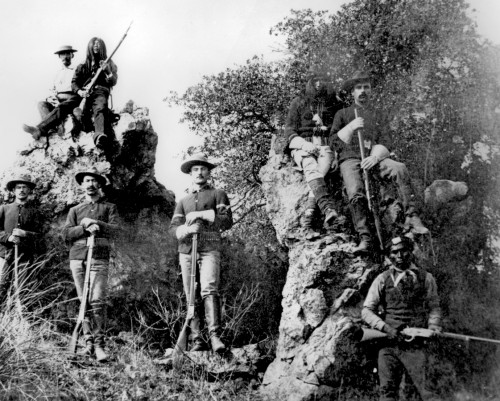

Originally established as a private fur trading fort in 1834, Fort Laramie evolved into the largest and best known military post on the Northern Plains before its abandonment in 1890. This “grand old post” witnessed the entire sweeping saga of America’s western expansion alongside Native American resistance to encroachment on their territories.
The popular view of a western fort, perhaps generated by Hollywood movies, is that of an enclosure surrounded by a wall or stockade. Fort Laramie, however, was never enclosed by a wall. Initial plans for the fort included a wooden fence or a thick structure of rubble, 9 feet high, that enclosed an area 550 x 650 feet. Because of the high costs involved, however, the wall was never built. Fort Laramie was always an open fort that depended upon its location and its garrison of troops for security.
In 1841, it was purchased by the American Fur Company and renamed Fort John. In 1849, it was purchased by the United State Army for the purpose of protecting the many wagon trains of migrant travelers on the Oregon Trail.
Today, the Fort Laramie National Historic Site is open year round for visitors.
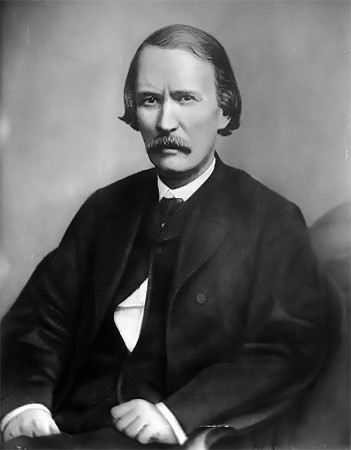
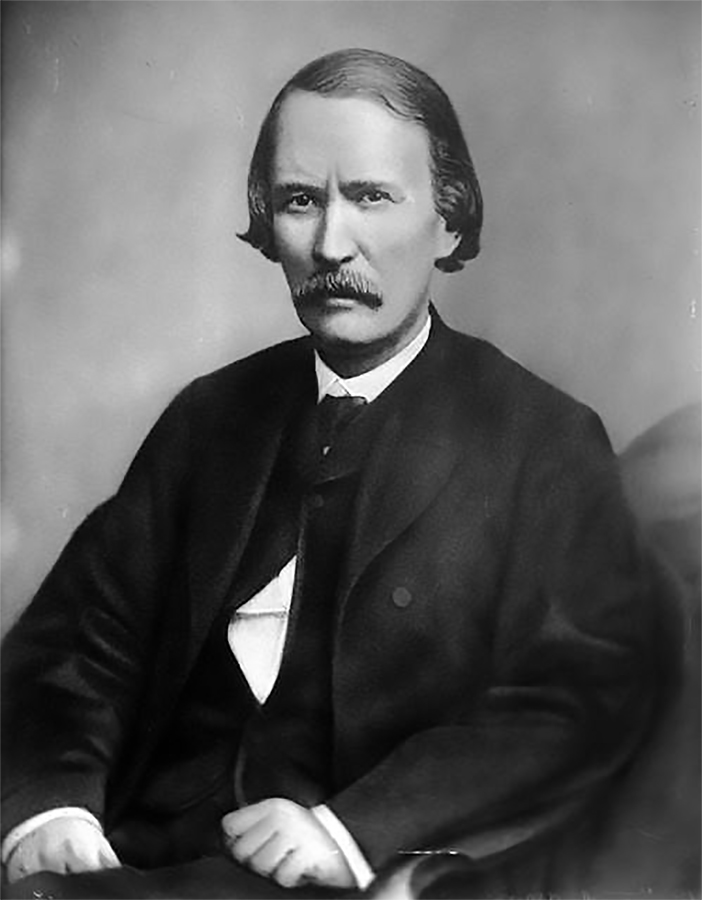
Kit Carson (1809-1868)
Christopher Houston “Kit” Carson (Dec. 24, 1809 – May 23, 1868) was an American explorer, guide, fur trapper, Indian agent, rancher, and soldier who traveled through the southwestern and western United States. Carson became a frontier legend in his lifetime through biographies and news articles written about his adventures. Exaggerated versions of his exploits were the subject of dime novels at the time.
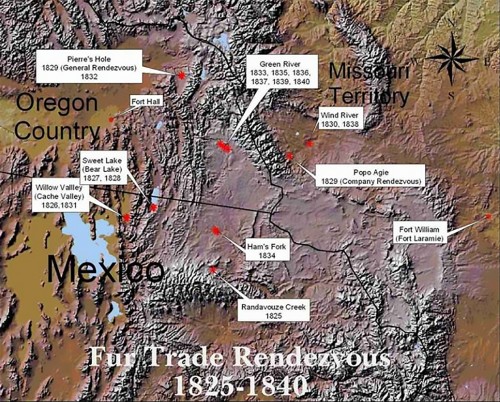
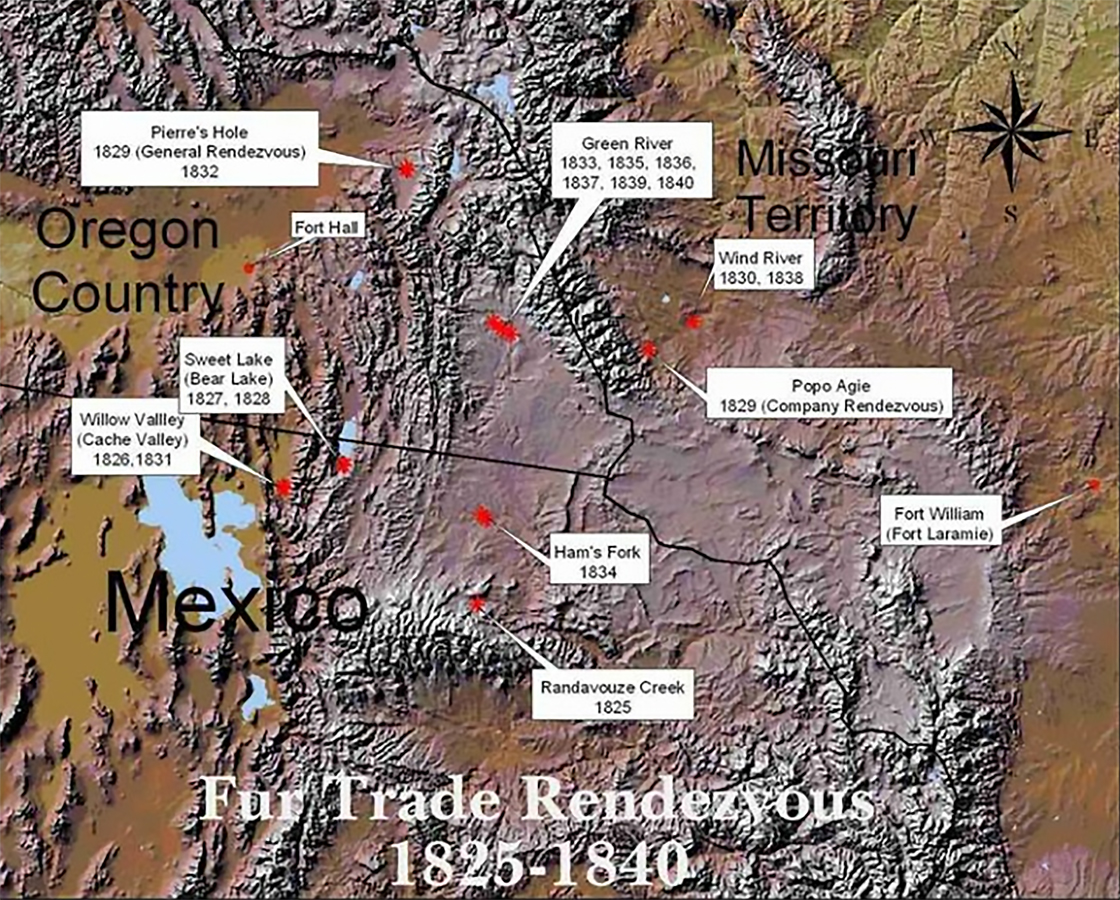
Fur Trade Rendezvous began in Wyoming in 1825 near present day Burnt Fort. Until 1840, they were held near Pinedale, Kemmerer, or on the Wind River near Riverton and Lander. Occasionally, they were held in Utah or Idaho.
Rendezvous were like trade fairs where trappers and Native Americans sold pelts to the fur companies and the fur companies sold or traded goods and other wares to them in exchange.
At the 1832 Rendezvous at Pierre’s Hole, there were approximately 120 lodges of Nez Perce, 80 Flatheads, 90 trappers from Dripps & Fontenelle, 100 trappers from the Rocky Mountain Fur Company, 100 men from Sublette and Campbell, assorted independent trappers, as well as a caravan from John Jacob Astor’s American Fur Company in attendance.
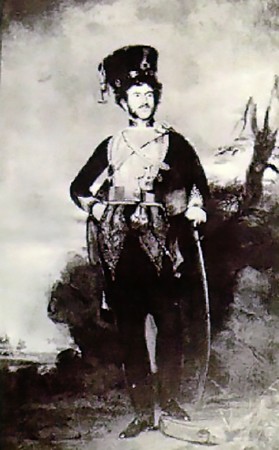
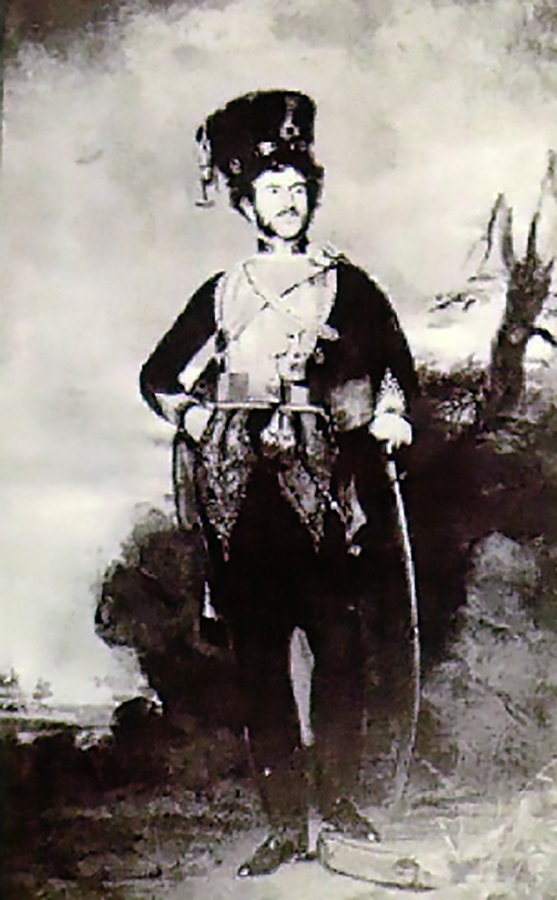
Sir William Drummond Stewart, 7th Baronet (1795 – 1871) was a Scottish adventurer and British military officer who traveled extensively in the American West in the 1830s. To document his trip, he hired American artist Alfred Jacob Miller to join him.
Miller (1810-1874) is famous today for his images of the American West, specifically of the Rocky Mountain fur trade and its participants, including this 5 x 9-foot portrait of Captain Stewart during one of his early trips to the mountains.
Many of Miller’s completed oil paintings of American Native American life and the Rocky Mountains originally hung in Murthy Castle in the U.K., though they have now been dispersed to a number of private and public collections.
Learn more about William Drummond Stewart and Alfred Jacob Miller.
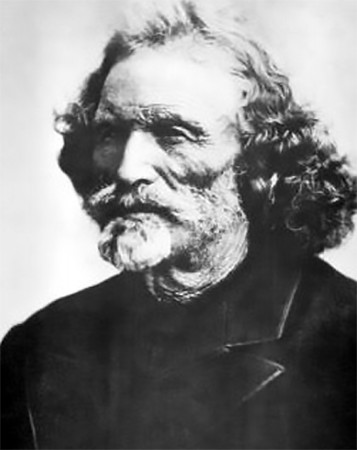
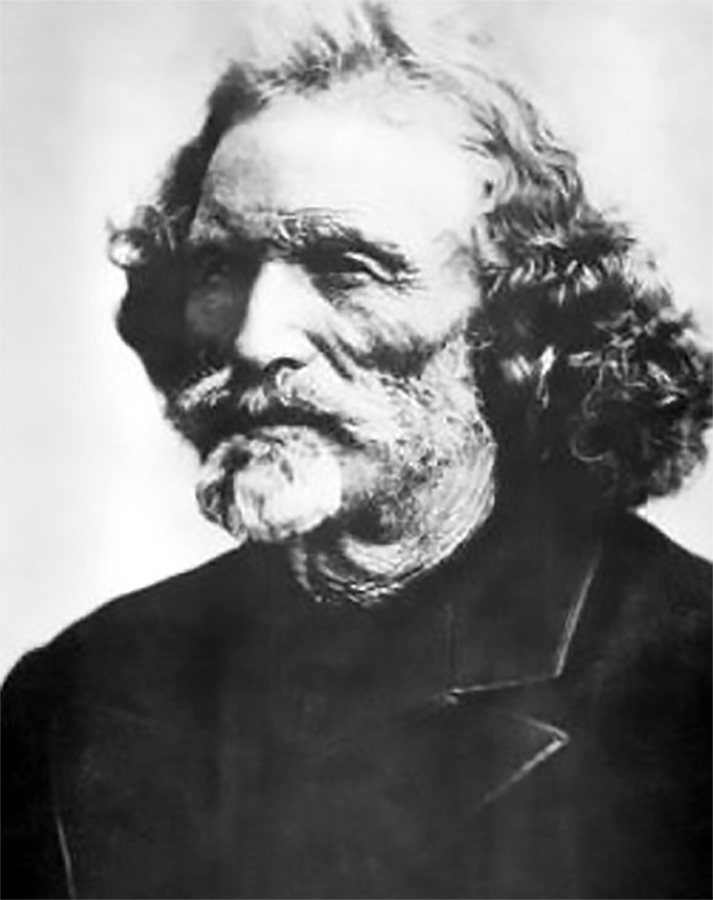
Jim Baker (1818–1898) was a trapper, scout, guide and friend of Jim Bridger and Kit Carson. A colorful figure of the Old West, he was also one of General John C. Fremont’s favorite scouts.
Born in Belleville, Illinois, at age 21 he was recruited by Jim Bridger as a trapper for the American Fur Company, and on May 22, 1839, he left St. Louis with a large party heading for the annual fur trading rendezvous in the mountains. In August 1841, Jim Baker was involved in a bitter fight at the junction of Bitter Creek and the Snake River when 35 trappers faces a large band of Sioux, Cheyenne, and Arapahoe tribesmen.
In 1855, Baker was hired as chief scout for General William S. Harney of Fort Laramie, and was part of the Federal Army sent to confront the Mormons moving westward. Baker was married numerous, each time to a Native American woman, including the daughters of a Cherokee chief and the Shoshone’s Chief Washakie.
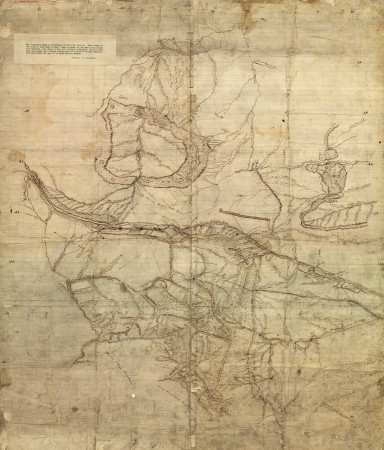
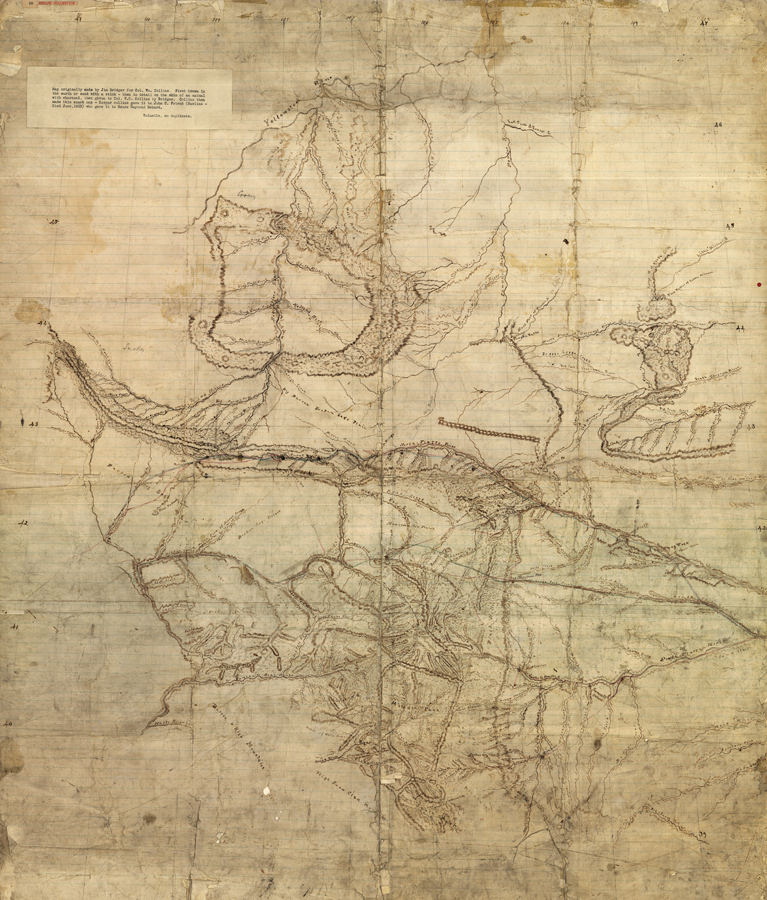
Jim Bridger’s Map
This hand-drawn version of mountain man Jim Bridger’s map depicts parts of what are now Montana, Wyoming and Colorado. It was drawn by Col. William Collins and is in the collection of the American Heritage Center at the University of Wyoming.
Learn more about Jim Bridger and other great Wyoming history.
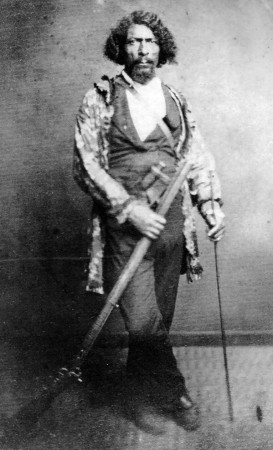
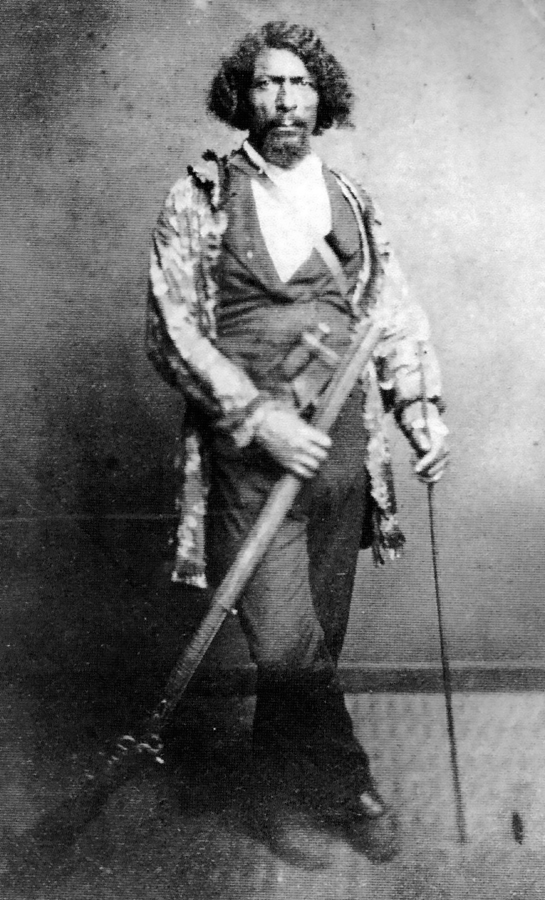
James Pierson Beckwourth (1798 -1866) was an African-American mountain man, fur trader and explorer. Beckwourth’s mother was an enslaved African-American and his father, Sir Jennings Beckwourth, was the slave owner who acknowledged the son they shared.
As a fur trapper, young Beckwourth lived with the Crow tribe for a number of years and is credited with the discovery of Beckwourth Pass through the Sierra Nevada Mountains between presentday Reno, Nevada and Portola, California during the California Gold Rush years. Thousands of settlers later followed this route to central California.
A book about Beckwourth’s life was published in 1856 as The Life and Adventures of James P. Beckwourth: Mountaineer, Scout and Pioneer, and Chief of the Crow Nation of Indians. Although originally considered little more than campfire lore, it has more recently been recognized as a valuable source of social history, especially for life among the Crow. However, not all of the biography’s details are reliable or accurate. During the civil rights movement of the 1960s, Beckwourth was celebrated as an early African-American pioneer.
Learn more about the history of Jim Beckwourth and his ties to Wyoming.
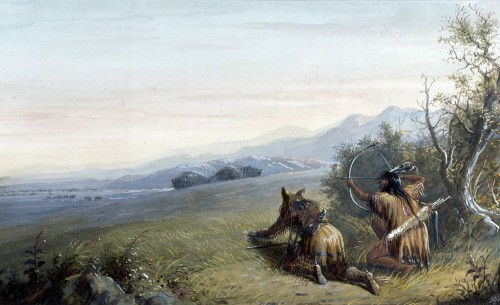
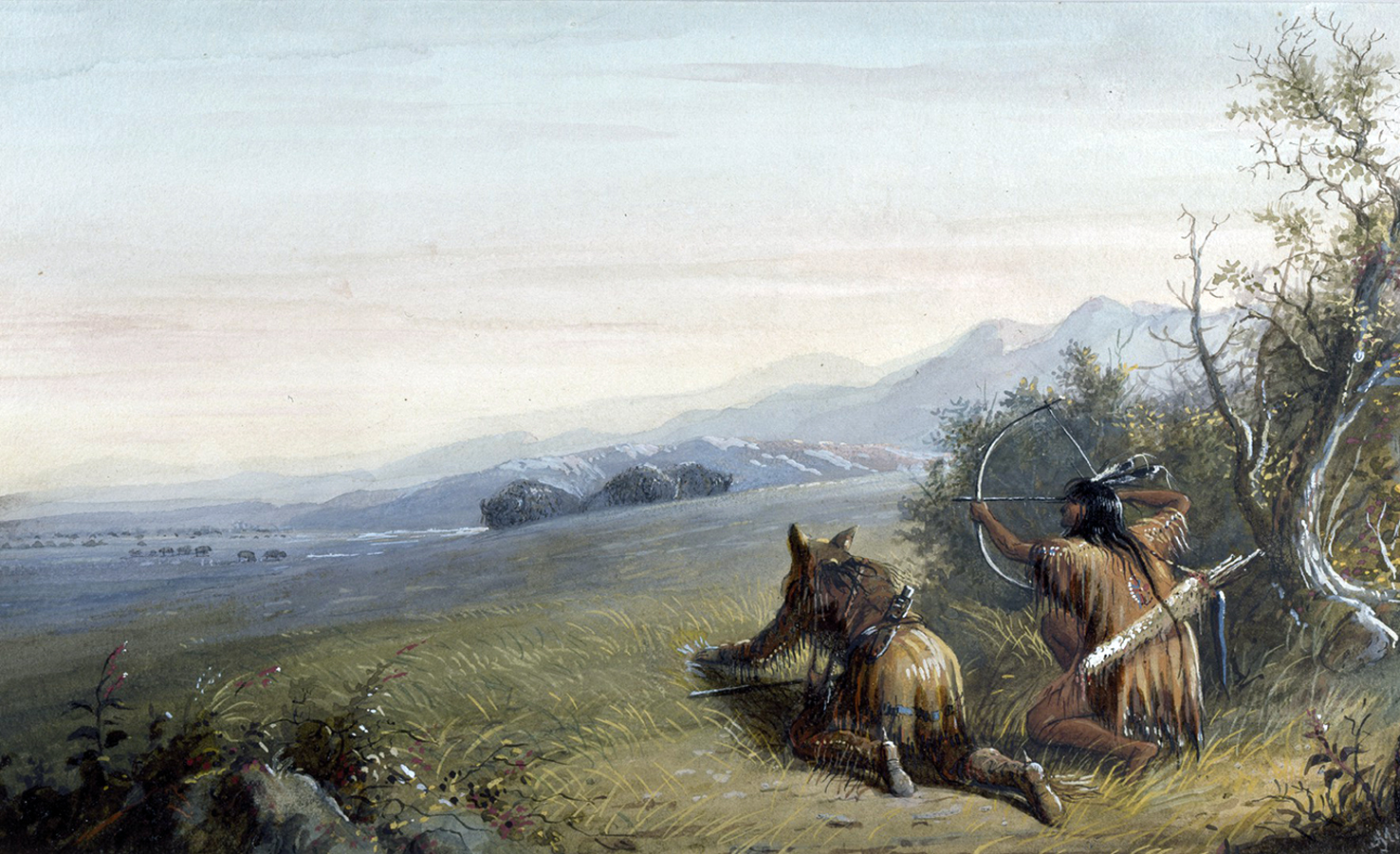
Alfred Jacob Miller (January 2, 1810 – June 26, 1874) was an American painter and sketcher best known for his paintings depicting the northwestern United States. His 1837 painting titled “Approaching Buffalo” depicts a Native American buffalo hunt.
“The hunters form for themselves a peculiar kind of a cap; it has two ears with a flap reaching to the shoulders. This is worn with a double object in view, one of which is to deceive the Buffalo in approaching – under such guise, the hunter is mistaken by the animal for a wolf, and is suffered to approach quite near. The mass of hair covering the forehead of the Buffalo obscures his sight and aids the trapper in his deception. In the sketch, a couple of Bulls are lying down near the swell of a rolling prairie. A trapper (in company with an Indian) is stealthily creeping along the rise – as the arrows of the latter make no noise, he is privileged to shoot first, the Trapper reserving his fire until the animals regain their feet, when he instantly ‘draws a bead,’ using his ramrod to steady his rifle. This mode of hunting is used only under certain circumstances; running being the favorite method, from its affording more excitement.”
A.J. Miller, extracted from The West of Alfred Jacob Miller (1837)
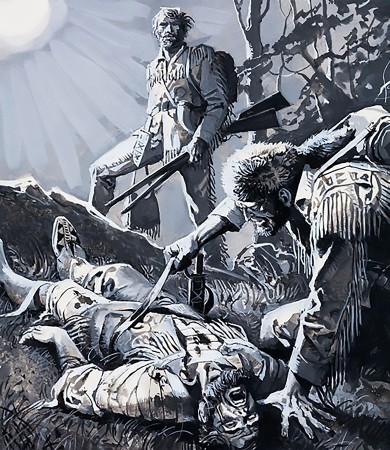
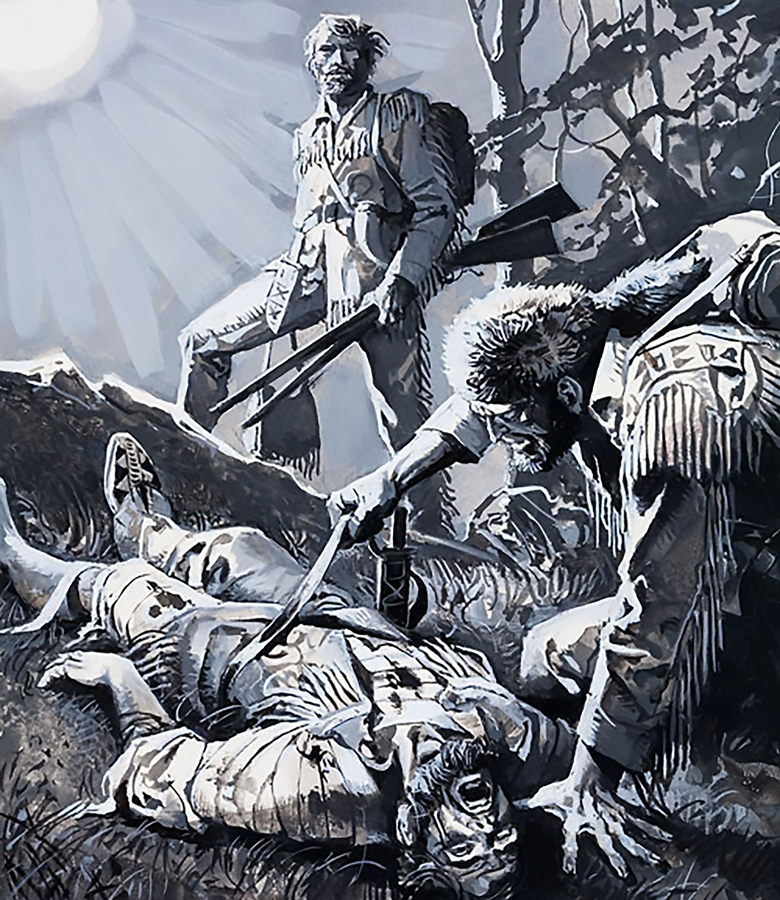
Hugh Glass (1780–1833) was an American fur trapper and frontiersman noted for his exploits in the American West, including his legendary cross-country trek after being mauled by a grizzly bear.