All posts by CavalrymanSteakhouse

Antoine

525-Antoine-Clement-walters-Mus-AJM-dura

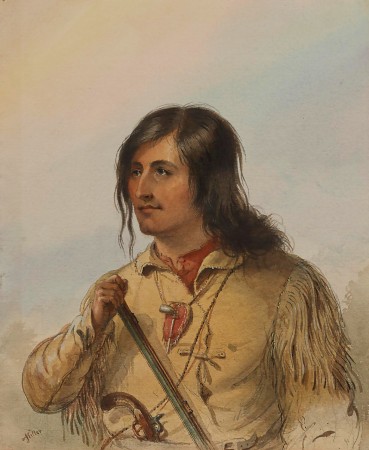
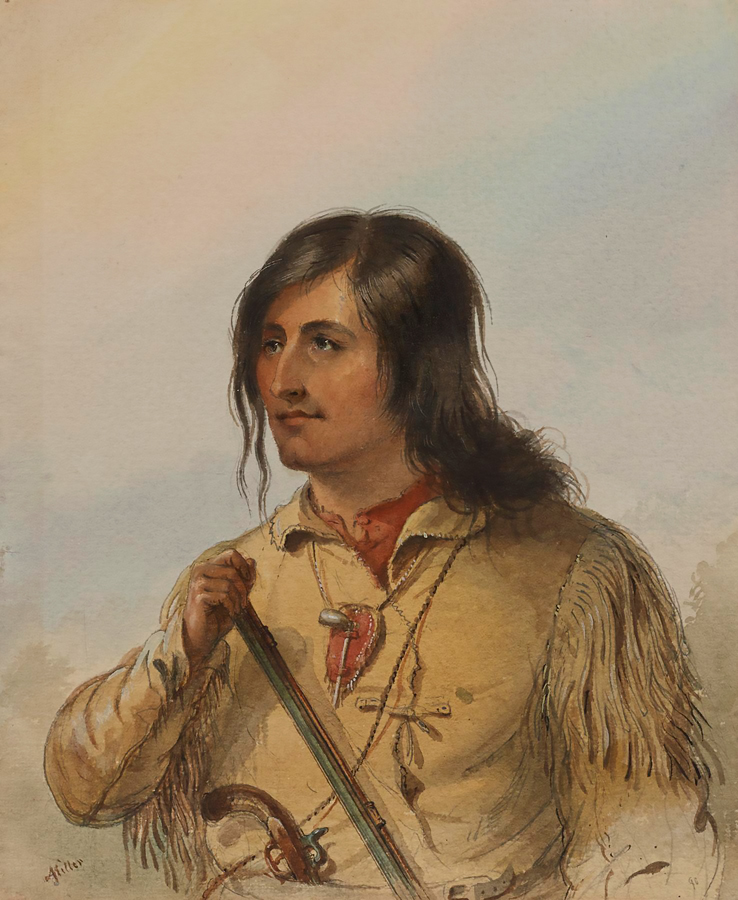
William Drummond Stewart hired Antoine, a “half-breed,”  to accompany him on his adventures into the fur trade wilderness. Antoine was loyal and by Stewart’s side at all times. Artist Alfred Jacob Miller used Antoine in several of his depictions of the Drummond expedition and the American West.

“The subject of the sketch is a half-breed (that is, his father was a Canadian, his mother an Indian) and one of the noblest specimiens of a Western hunter;  in the outward journey he killed for us about 120 Buffalo; his temper however, when aroused, was uncontrollable.” –A.J. Miller, extracted from The West of Alfred Jacob Miller (1837)

Learn more about Antoine and the art of Alfred Jacob Miller.
Resources

Attack by Crow Indians

Attack by Crow towards William Drummond Stewart and Antoine
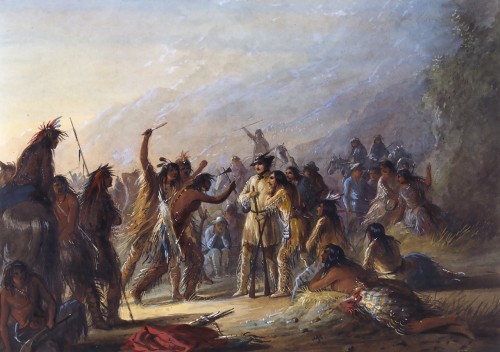
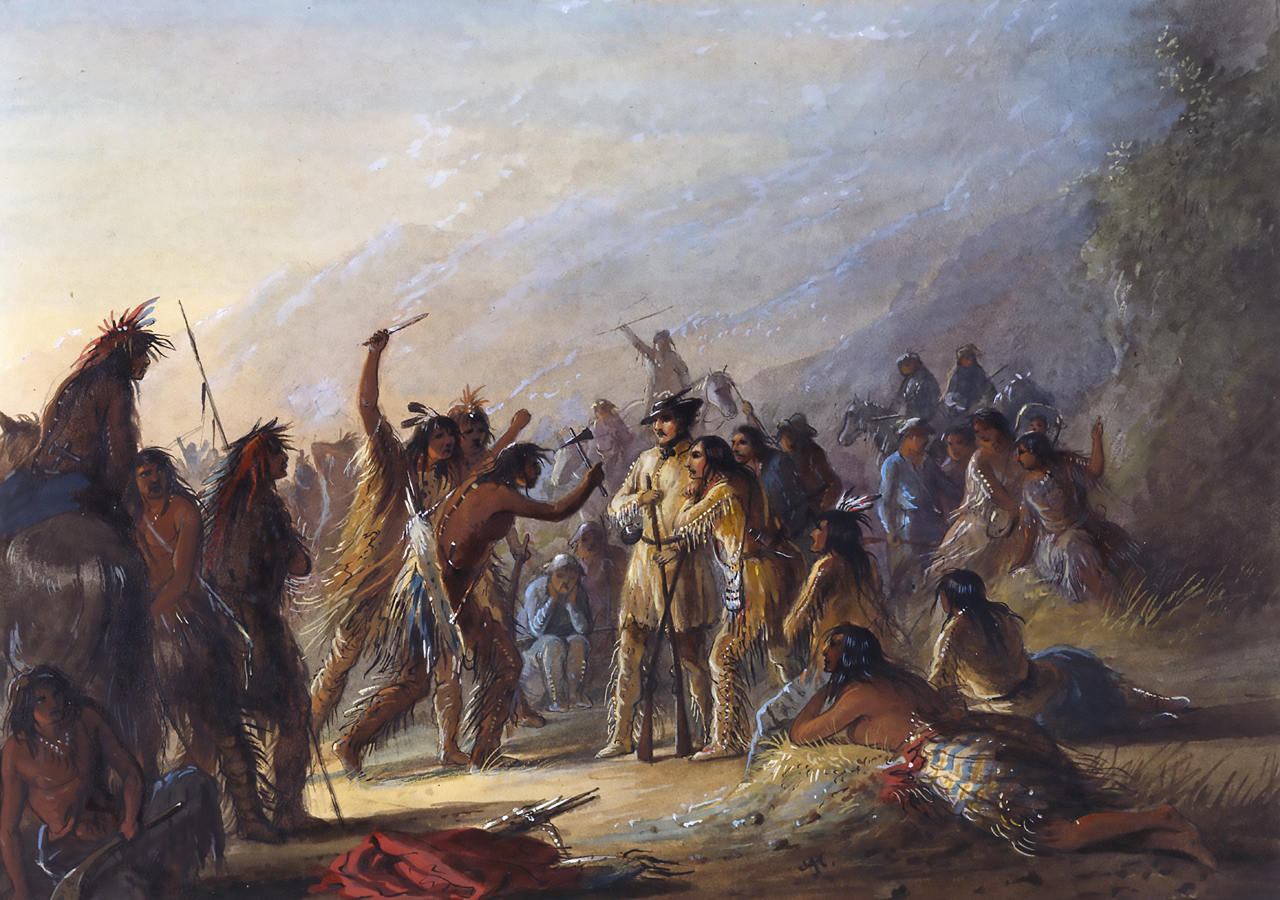
Attack of William Drummond Stewart and Antoine by Crow Indians, by Alfred Jacob Miller.

Although Miller, the painter, did not see this scene after it occurred during one of Captain Stewart’s earlier trips to the mountains,  the witnesses recounted it to him in detail and he painted several versions of it. The story goes that a  band of young Crows invaded the camp while Stewart was in charge. They carried off stock, pelts, and other property. As Stewart described the incident, a Crow medicine man had told the braves that, if they struck the first blow, they could not win. Thus, the braves had to provoke Stewart or someone in his party into striking first. Stewart stood firm, refusing to strike. The Crows left, and the captain survived a situation in which he would have surely lost the battle.

Learn more about William Drummond Stewart, Antoine and Alfred Jacob Miller.

Resources

Jacques La Ramie

520-Jacque-La-Ramee-monument-near-Wheatland-Dura

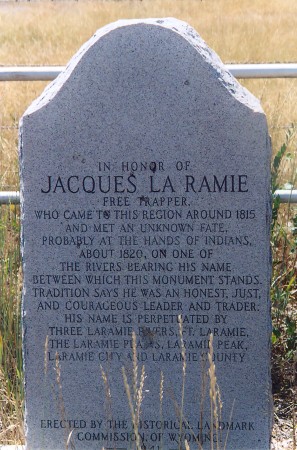
Jacques Laramie (also known as Jacques La Remy and LaRamie) was a French Canadian who worked as a fur trapper and trader for the North West Company, which traded furs out of Canada.

In 1815 or 1816, LaRamie and a small group of fellow trappers settled in the area where Fort Laramie would later be located (LaRamie’s Point). This was the confluence of the North Platte River and what is now the Laramie River. In 1821, against his fellow trappers’ warnings about hostile Native American tribes, LaRamie decided to pursue trapping along the river that now bears his name. When he did not show up for the rendezvous the following year, a search party went looking for him.

LaRamie is said to have been killed by either Arapahoes or Utes and placed in the river by a beaver dam near the headwaters of the Laramie river. This area is in Colorado near Cameron Pass. Here, his remains were found several years later by the expedition sent to locate him. The river was named “Laramie” in his honor, and the name would later be given to the Laramie Mountains, as well as the towns of Laramie and Fort Laramie, Wyoming.

Learn more about Jacques LaRamie and more great Wyoming history here.

Resources

Chief Washakie & the Shoshone Wind River Reservation

518-chief-washikie-reveared-by-shosonne-as-great-leader-dura

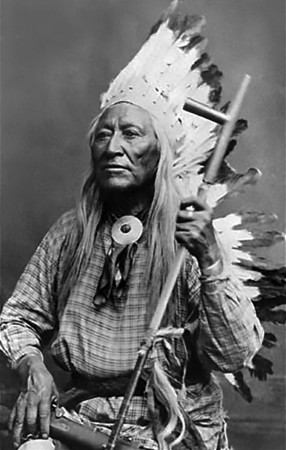
Chief Washakie, c.1804-1900, a chief of the Eastern Shoshone tribe of Wyoming, was noted for his exploits in fighting and also for his friendship with the white pioneers. When wagon trains were passing through Shoshone country in the 1850s, Washakie and his people aided the overland travelers in fording streams and recovering strayed cattle. He was also a scout for the U.S. Army.

Learn more about Chief Washakie and the Shoshone of Wyoming.

Resources

John Jacob Astor/American Fur Company

515-John-Jacob-Astor-Dura

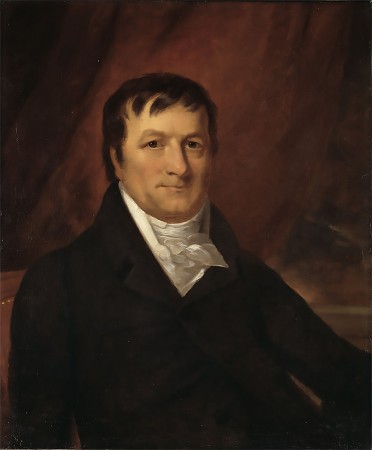
John Jacob Astor (1763 – 1848) was a German-born American businessman, merchant, fur trader, and investor who was the first prominent member of the Astor family.  He was the first multi-millionaire in the United States and as such,  created the first family trust in America. His commercial connections extended over the entire globe and his ships were found in every sea.

Learn more about John Jacob Astor and his connection to Wyoming.

Resources

John Coulter (aka Colter)

514-John-Coalter-Dura

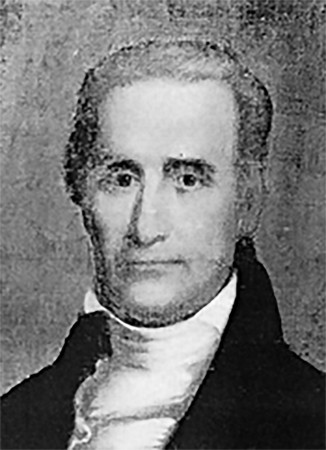
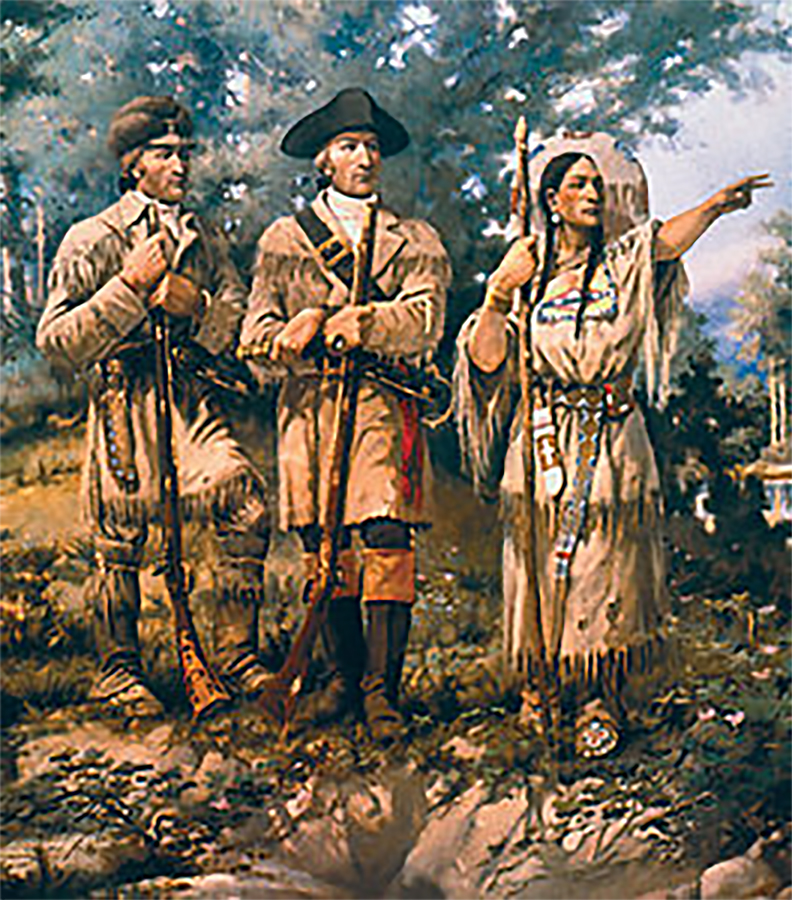
John Coulter (c.1774 –1812) was a member of the Lewis and Clark Expedition (1804–1806). Though party to one of the more famous expeditions in American history, Colter is best remembered for explorations he made during the winter of 1807–1808 when he became the first known person of European descent to enter the region now recognized as Yellowstone National Park, as well as the Teton Mountain Range. Colter spent months alone in the wilderness and is widely considered to be the first mountain man.

The original script for director Cornel Wilde’s 1965 movie, The Naked Prey, was largely based on Colter being pursued by Blackfoot Native Americans in Wyoming.

Learn more about John Coulter (aka Colter) and his connection to Wyoming.

Resources

Coureur des Bois

504-coureurs-du-bois-Dura

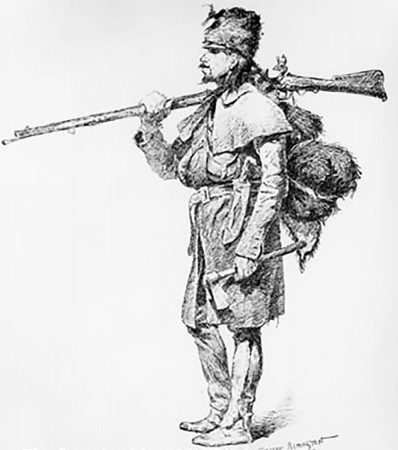
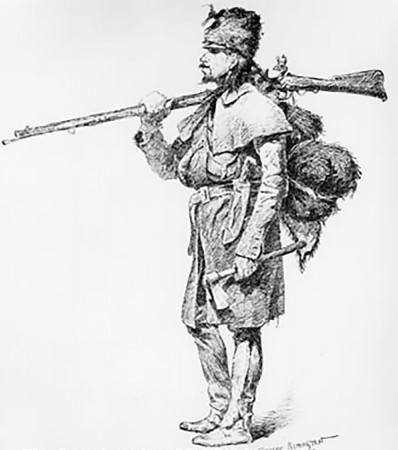
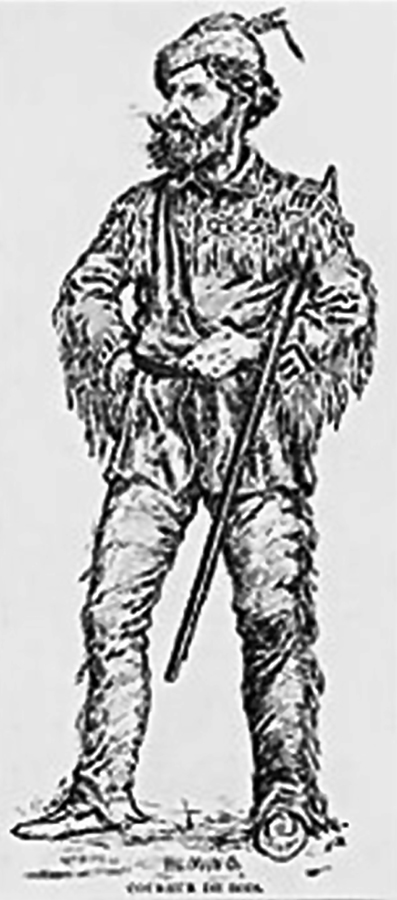
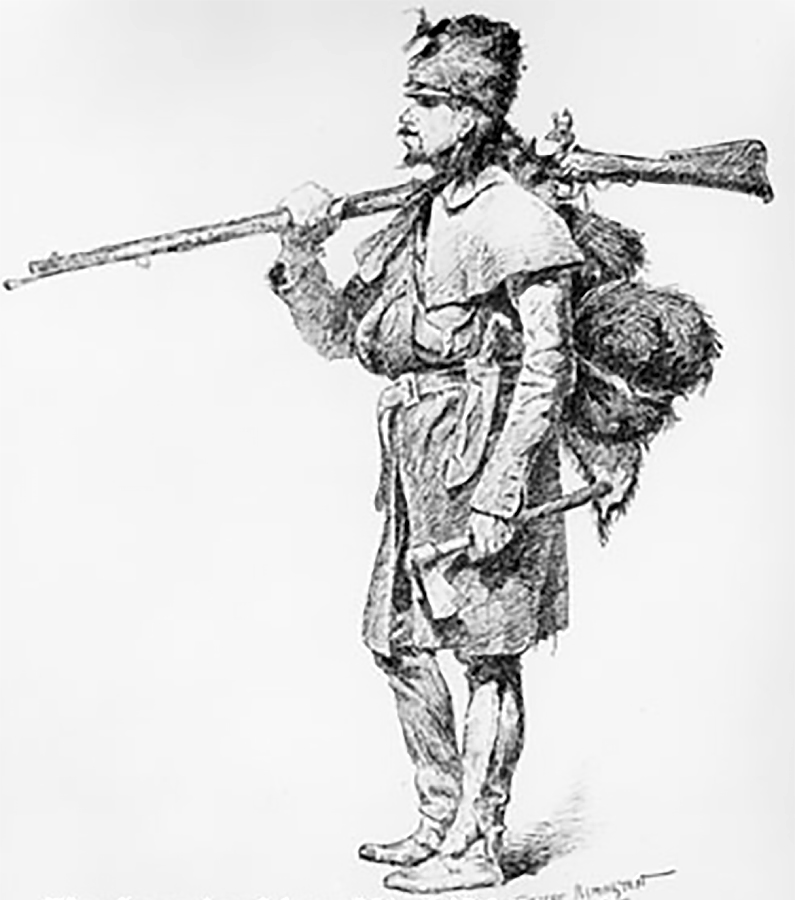
“Coureur des Bois” or “Woods Runners” were men from New France (Montreal) who made their way out west to trap fur animals. Jacque LaRamie would fit into this group of French trappers and explorers.

Prior to the Lewis and Clark Expedition, the term “Coureur des Bois” was most strongly associated with those who engaged in the fur trade in ways that were considered to be outside of the mainstream.  Early in the North American fur trade era, this meant circumventing the normal channels and instead going deeper into the wilderness to trade. Later, during the late 17th and early 18th centuries, the practice involved trading without permission from the French authorities when such permission was required. During the 17th century, the fur trade was very lucrative for New France. Competition was fierce, and many colonists risked the journey west and north through hostile Iroquois territory from the settlements around Montreal to the pays d’en haut, or “upper country” (the area around the Great Lakes) to trade with native trappers.

These Coureurs des Bois were often not looked upon favorably by Montreal authorities or royal officials. French authorities preferred that the transportation of furs be handled by the natives (and later the Voyageurs) than have independent, unregulated traders handle it. As a way to curb the unregulated trade of independent businessmen and their burgeoning profits, the government of New France instated a permit system.  Coureurs des Bois were basically unlicensed traders, treated at times as outlaws by New France authorities. At other times, they were tacitly used to help further French objectives for the New World.

According to historian W. J. Eccles, during the 17th century, Coureur des Bois meant “anyone who went into the wilderness to trade for furs.” Until 1681 this practice was illegal in the French territories in North America and so to a certain extent the term meant “outlaw”. After 1681, the meaning was reinforced by the reference to those who operated outside of the licensing process.

Resources
Louisa Ann (Eliza) Swain

495-Eliza-Swain-Dura

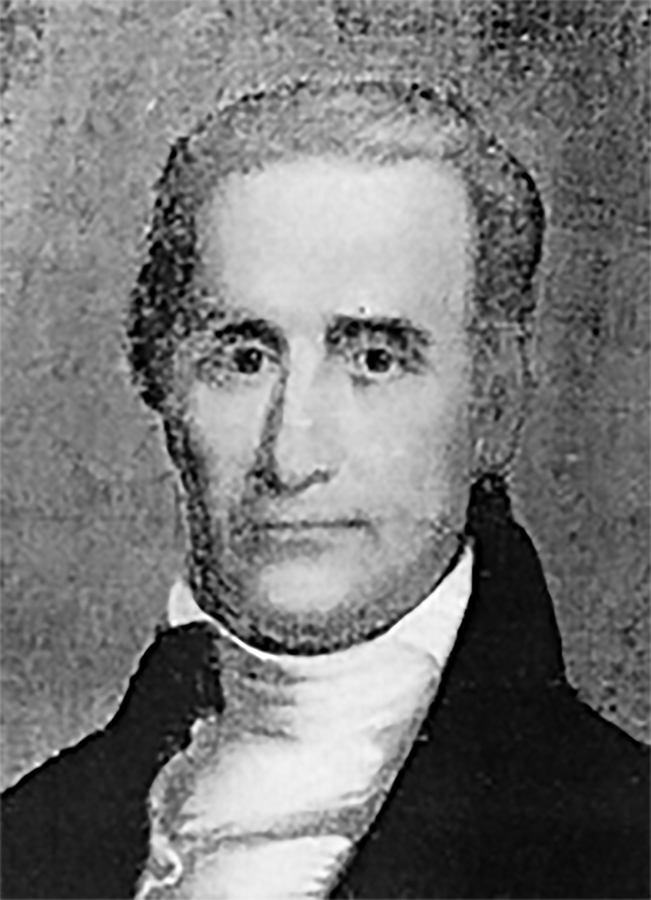
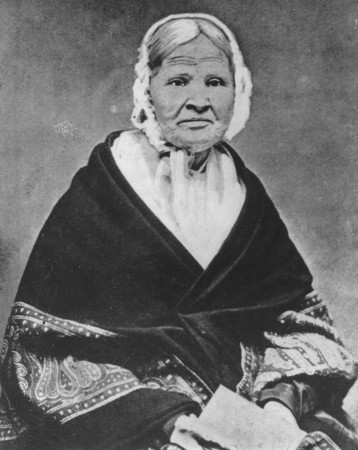
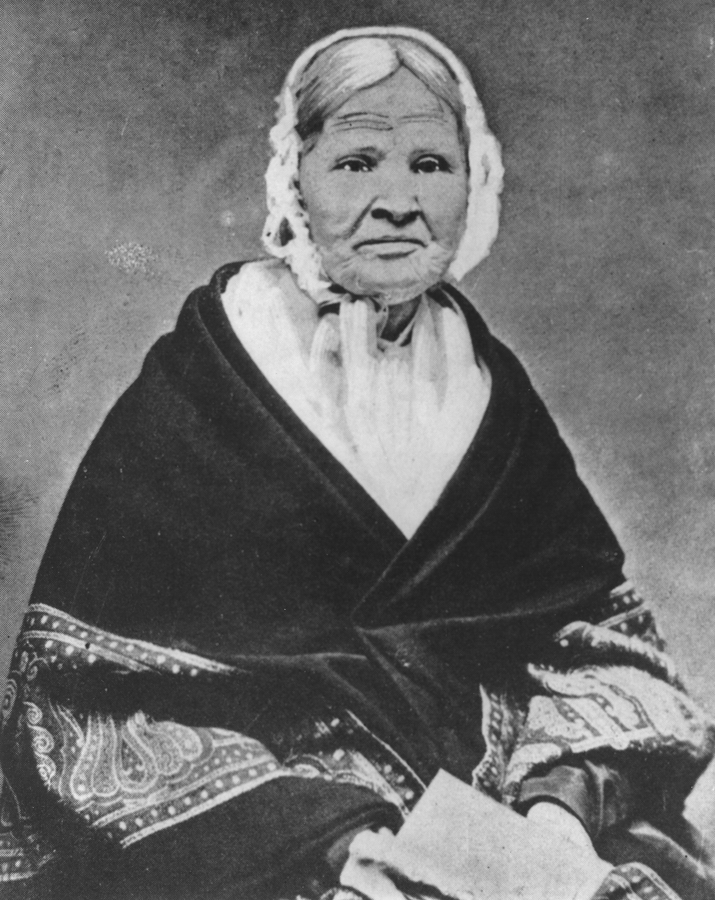
Louisa Ann (Eliza) Swain of Laramie was the first woman in the United States to vote in a general election after the Wyoming Territorial Legislative Assembly gave women the right to vote in December 1869.

On September 6, 1870, Mrs. Swain happened to walk by the polling place, which had not yet officially opened, but election officials asked her to come in and cast her ballot. The Laramie Daily Sentinel described her as “a gentle white-haired housewife, Quakerish in appearance.” Swain was 69 years old and one of 93 women to vote that day in Laramie.

In 2005, a bronze sculpture honoring Swain was dedicated in front of the Wyoming House for Historic Women.  The museum is located on 2nd Street between Garfield and Grand in Laramie and honors twelve Wyoming women whose lives have impacted the world.

Learn more about Louisa Swain

Resources