All posts by CavalrymanSteakhouse

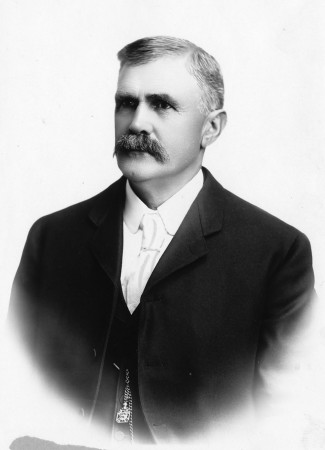
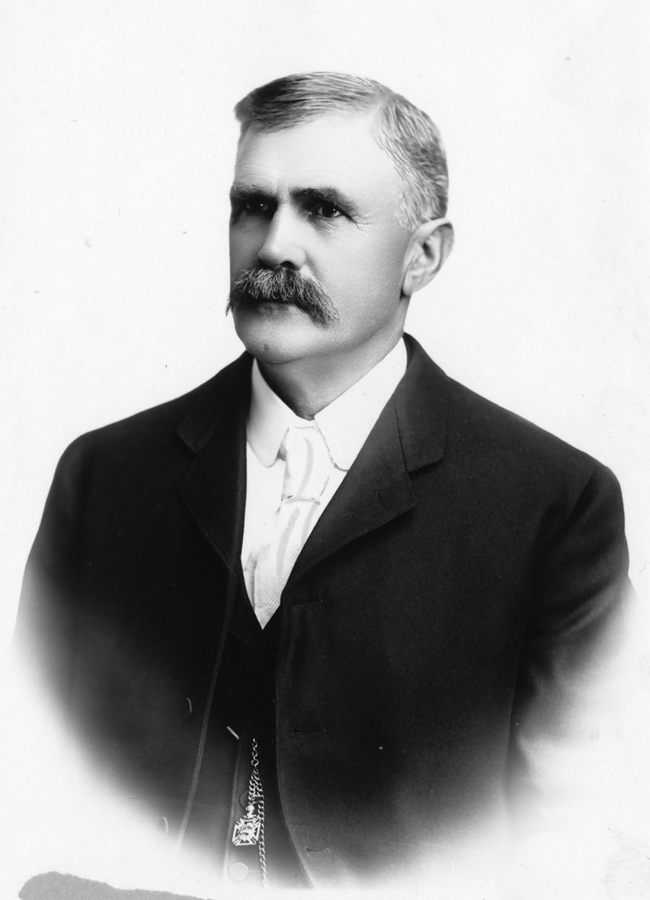
Ora Haley

Ora Haley was the owner of the”Two Bar Ranch and Cattle Co.” along the Little Snake River in southeastern Wyoming in the 1890s. Known as a “bovine king,” his property eventually expanded to include 50,000 acres in Wyoming and an additional 2,500 acres in northern Colorado.

A large operation such as Haley’s did not mix well with those of the smaller settlers in the area, and there was a good deal of cattle rustling and other illegal activity around his property. Tom Horn, a hired gun and range detective, was hired in 1892 by the Swan Land and Cattle Company in Wyoming as a horse breaker. In truth, however, he was a stock detective working for cattle barons who were fighting for their very existence. Although a link between Ora Haley and Tom Horn was never proven, area rancher Matt Rash and Isom Dart, a local ranch hand, were both mysteriously murdered, and neither case ever solved.

A federal grand jury later indicted Haley for illegal fencing.

Learn more about Ora Haley.

Resources

Who Was That Thornburgh Guy?

Thomas Tipton Thornburgh was a Major serving in the United States Army’s Fourth Infantry Regiment at Fort Steele near Rawlins in the late 1870s. A Civil War veteran and West Point graduate, Thornburgh was transferred to the Paymaster Corps., but missed the “action” of the West and was transferred to the infantry at Fort Steele.

Action he wanted – action he got! When trouble arose between the Ute tribe on the White River Reservation near Meeker, Colorado and the reservation agent, Thornburgh and a detachment of 175 men were called out to halt the advancing Utes. Thornburgh was killed, and his troops required reinforcement from the 9th Cavalry “Buffalo Soldiers,” as well as 5th Cavalry units from Fort D.A. Russell.

Many places and streets in Laramie have been named after Thornburgh, although no one is sure why, as there seems to be some confusion concerning the part he played in local history. And, despite this fondness for the man, his name is often misspelled as “Thornburg.”

Learn more about Major Thomas Tipton Thornburgh. 

Resources

Street Names in Laramie

Where did Laramie Street Names Come From?
By
Kim Viner
Laramie Plains Museum

Editor’s note:  This story is one in a series prepared for the Albany County Museum Coalition, an alliance of organizations that promote Laramie’s historic and cultural resources.

Did you ever wonder how the streets in downtown Laramie got their names? Well, if you like the names, give credit to the Laramie Boomerang.

On February 19, 1889, the editors at the Boomerang stated that the original 1868 east to west street names of A, B, C etc. and the north to south numbered streets were not becoming of a modern metropolis in the late 1800’s. So, on that day the paper suggested an update was necessary.

The paper proposed that the streets should be renamed for early settlers or well-known locations. Names such as Trabing, Hutton, Holliday and Fillmore and famous sites such as Yellowstone were initially suggested.

Within a week, however, the Boomerang published another article that offered a different suggestion. This one came from local businessman W.H. Root. He suggested to the paper that the streets be named after “well known military officers who have served in this vicinity.” The Boomerang’s suggestion, with Root’s modification, took hold and soon the Laramie city council appointed a three-person committee to study the proposal.

On March 15, 1889, they reported to the council a list of names that should be considered and the recommendation that the numbered streets not be changed. For the east to west streets they chose mostly military officers and some pioneers. Over the next week, the list was changed. The proposed Bonneville Street was changed to Grand Avenue and the proposed Bridger Street was changed to Sheridan Street.  On March 21, the Boomerang listed the names for all the streets that were to be voted upon by the city council.

The list was adopted by city ordinance on May 8, 1889, and the formal list published by the paper on May 14. The paper praised the actions of the council, noting it was one of the last acts of the outgoing administration following the election of new council members on April 2, 1889 who would take office in June.

There was confusion over the changes. In early June, new mayor Augustus Trabing asked at a council meeting if the change had been approved. He said that several local residents where not sure of the name of the street in front of their houses. Councilman Hicks assured the mayor that the changes were official and lamented that people would know that if they simply read the paper. To rectify the situation, H. D.  Beemer was hired to paint street signs that were placed where the newly named streets intersected Second Street.

The new street names north of University to Mitchell have remained the same as they were adopted in 1889. Two changes happened south of University. Mizner Street was never built and the name not used. A significant change occurred in 1928. A proposal was made to change Thornburgh Street to Ivinson Avenue in honor of all the philanthropic works Ivinson had done for the city.  Just after the New Year, A.C. Jones, the vice president of the First National Bank and a longtime friend of Edward Ivinson, circulated a petition asking citizens of Thornburgh Street to support his call to the city council to rename the thoroughfare “Ivinson Avenue.”

All but one or two agreed and Jones presented the petition to the city. On January 18, the city council passed the ordinance renaming the street Ivinson Avenue. Mayor Downey was out of the city on that day but signed the ordinance on January 21, 1928. Interestingly, there is no record of the official name being changed to “Ivinson Street” as shown on current street signs.

Kim Viner, “Street Names in Laramie,” Volunteer at the Laramie Plains Museum 
Early Pioneers, Early Laramie

A few pioneers had settled in the Laramie area prior to Fort Sanders’ founding, but with the new protection of the fort, that number grew quickly. Some ranches were established in the area, and aside from the civilians housed at Fort Sanders itself, a collection of tents and shacks formed along the Elizabeth Creek (now Spring Creek) approximately 2 miles north of Fort Sanders.  This was also very close to the ferry for the immigrant trail. These townspeople served the travelers, as well as the soldiers at the Fort in a variety of ways. Dominating the camp was the Sunnyside Resort, a log-built bawdy establishment catering to thirsty soldiers, weary travelers, and men seeking companionship.

In October 1867, the town of Laramie was platted by the surveyors for the railroad.  Many of the inhabitants of the creek encampment moved quickly to the platted land and set up squatter’s structures.  Land would not officially go on sale until April 1868.  There were a variety of tents, log-slab shacks, upended railroad ties and lodgepoles set into the ground and draped with canvas.

Early businesses from the creek were established in town, such as Henry Wagner’s Dry Goods Store. The first hotel to be built was the Shamrock, a long log cabin owned by Patrick Doran. Doran had walked westward from Pine Bluffs with a group of friends (M.H. Murphy, John and Lawrence Fee and John Connors). The group found work in the tie-camps in the mountains,  as well as carrying chain for the surveyors platting the city.

Learn more about Laramie’s early pioneers and cattle barons. 

Resources

W. H. Holliday

873-Holliday-portrait-Dura

William Helmus Holliday was a successful Laramie businessman. He founded and owned the W.H. Holliday Co., a lumberyard, general mercantile and building contracting company built in 1886 that occupied the entire block between 2nd and 3rd and Garfield and Custer.

In the 1860s, Holliday, his brother Jethro and another partner –William R. Williams — owned a thriving timber company in Sherman, Wyoming (19 miles southeast of Laramie). The company provided the lumber for much of the construction of Greeley, Colorado. Within two years, Holliday bought out his partners and moved to Laramie.

Holliday was active in Democratic Party politics and served in the Territorial Legislature. In 1894, he was the Democratic candidate for Congress but lost his bid to Joseph Carey. He was elected to the Wyoming State Senate in 1892 but resigned to run for governor instead. He did not win. However, Holliday continued to serve in the Wyoming State Legislature for many years.

Learn more about W.H. Holliday.

Resources

Knadler & the Laramie Ice Houses

872-Knadler 1976_030_0034

Ice plants were essential to keep produce fresh as it traveled through the county, and some were built in Laramie. The Ice House in Laramie began down by the river and was bought by Knadler, a Fort Sanders soldier. The Union Pacific Railroad bought him out and built a bigger plant, which burned down and was replaced with a much larger ice plant uptown. A huge ice house was built over the years for the ease of handling ice and moving it on and off of trains.

After it was shut down, the town used this space for many activities.

Learn more about the Laramie Ice Houses.

Resources

Nellis and Eleanor Corthell

870-Nellis-Corthell-and-Elinor-Quackenbush-Corthell--1900-Dura-(1)

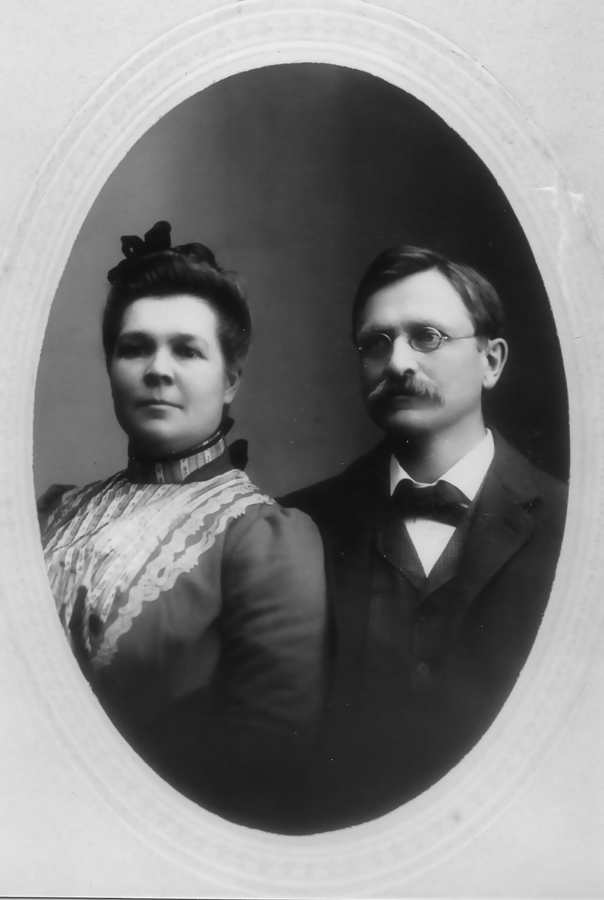
Nellis Eugene Corthell arrived in Laramie in 1881 from Franklinville, New York. He worked on ranches and studied law in the office of Col. Stephen W. Downey. Corthell was admitted to the bar in 1883.

From 1887-1888, Corthell served as the county’s prosecuting attorney at a time when Albany County extended north to the Montana line. He had an outstanding legal career for 50 years, including appearances before the U.S. Supreme Court.  Locally, Corthell served on the Albany County Board of Commissioners, as county Democratic chairman, and on the Laramie school board. He was also president of the Pioneer Canal Company, a partner in a plaster mill, and owner of the Laramie Boomerang from 1890 to 1911.

His wife, Eleanor Quackenbush Corthell, came to Laramie in 1882 from Black River Falls, Wisconsin. She taught at the newly opened Rock Creek school 50 miles north of Laramie before transferring to the new west side school in Laramie.  Eleanor met the young law student at a social function and they married in 1885. Together, they reared seven children including Evelyn, Morris, Miriam, Gladys, Robin, Huron, and Irving.

Eleanor was active in numerous civic and community affairs. She was a charter member of the Laramie woman’s club in 1898 and active in the Women’s Christian Temperance Union, as well as the First Baptist Church Ladies Aid organization. For many years she collected good books, made portable shelves and supplied these books to rural schools. She organized the first West Laramie community club and a girl’s sewing club. Eleanor had a great love for the outdoors and natural beauty of Wyoming; in the summer of 1903 she departed in a wagon with her seven children for a two-month-long overland trip to Yellowstone. She chronicled their many adventures in a book she titled, A Family Trek to the Yellowstone.

The Corthell family lived at 815 Grand Avenue for 24 years before moving to a new farmstead on the Corthell farm in West Laramie. The liveliness of their children and numerous grandchildren filled both homes. The Corthells’ home on Grand (now occupied by their great-granddaughter), as well as the house and barn in West Laramie still stand today.

After Eleanor’s death in 1932, an article in the Laramie Daily Boomerang noted that “Mrs. Corthell’s life and that of her family are so closely interwoven with happenings here in Laramie that the story is an epitome of the town’s history for the last 50 years … she had been actively and helpfully associated with practically every movement that concerned the public welfare.”

Nellis Corthell died in 1938 after a long and brilliant career in law and civic affairs.

Photo and information courtesy of Ann Mullen Boelter, member of the family.

Learn more about Nellis and Eleanor Corthell.

Resources

Trabing Commercial Company Store

864-Trabing-Co-Dura

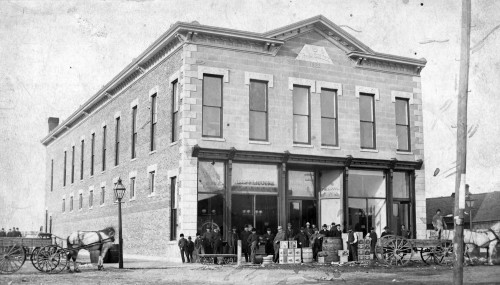
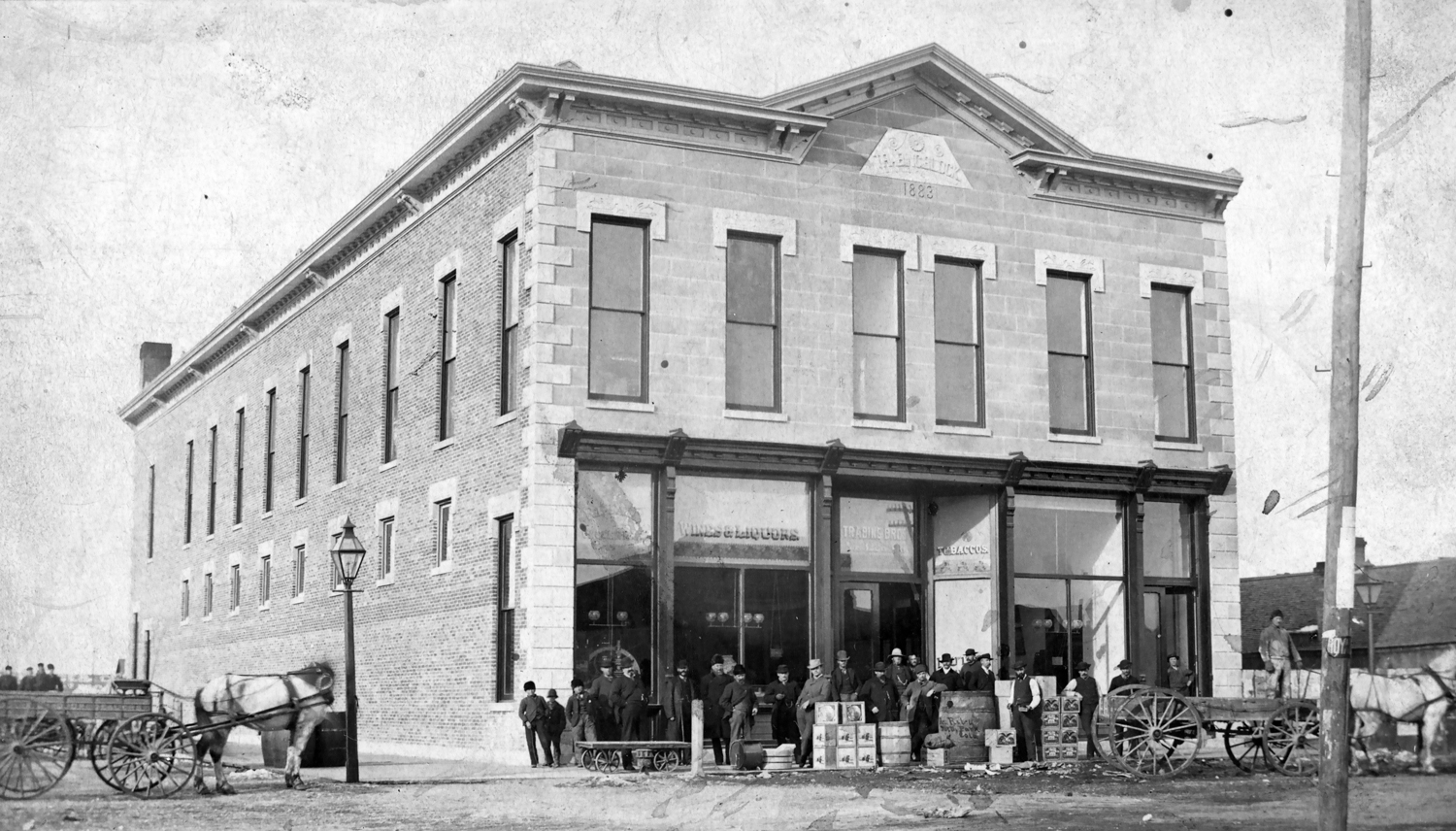
The Trabing Brothers’ Trabing Commercial Company Store was one of the first commercial enterprises in Laramie. Augustus J. Trabing and his brother Charles had opened other stores in Nebraska and Wyoming, but these operations either burned down or were robbed. In 1869, Augustus Trabing moved his headquarters to Laramie in the old Blue Front Theatre. It was a one-story wooden structure that Trabing painted a bright blue, hence the name Blue Front.

When he opened the Laramie Grocery Company at the corner of Garfield and South Second Street, the theatre was used as a warehouse. His retail and wholesale store was located at the corner of Garfield and South Second Street. Along with freighting and mercantile, the brothers engaging in stock growing.

Learn more about the Trabing Commercial Company Store.

Learn more about the fire that destroyed the store.

Resources

Freund and Brothers Gun Shop

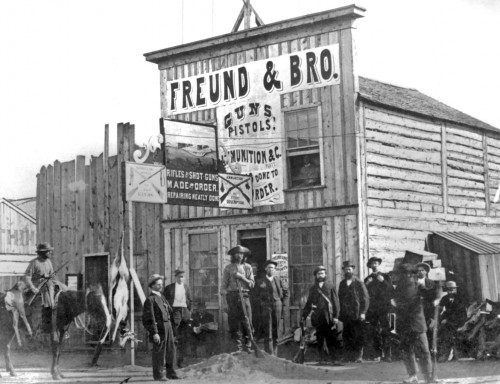
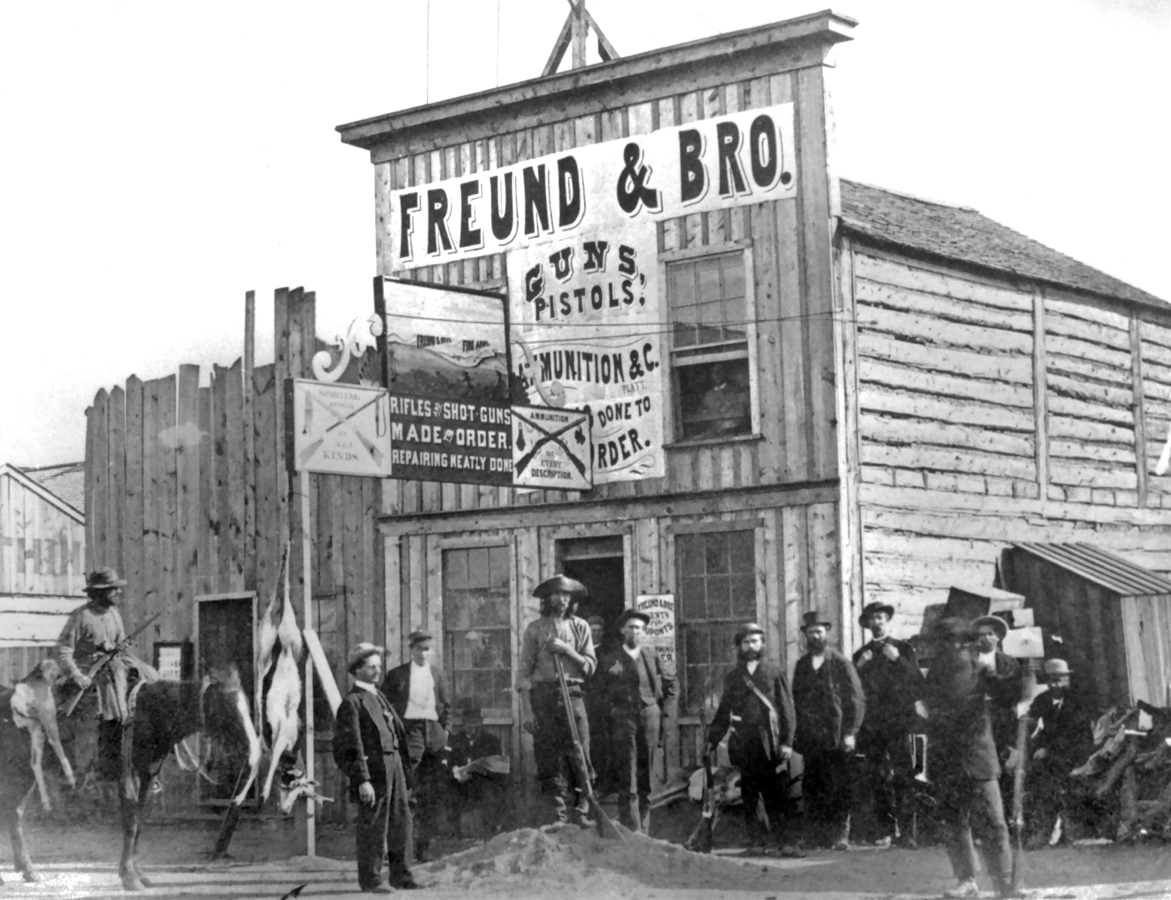
863-Exterior-of-Freund-&-Bro-Gun-Shop,-Laramie,-DT-1868-1-duraFreund and Brothers gun shop, located between First and Second Streets on what is now Ivinson Avenue, was one of the first wood-framed buildings in Laramie built in 1868. With the news of the railroad’s arrival, people rushed to claim property inside Laramie City. At first, theirs was a typical “tent city” running along the railroad route. Wood structures were built so quickly that Laramie was almost unrecognizable after just a few short months.

Learn more about Freund and Bros. gun shop and the history of the railroad in Wyoming.

Resources