All posts by CavalrymanSteakhouse

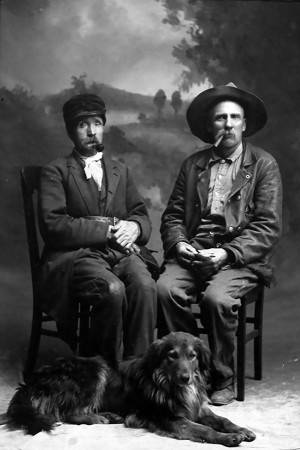
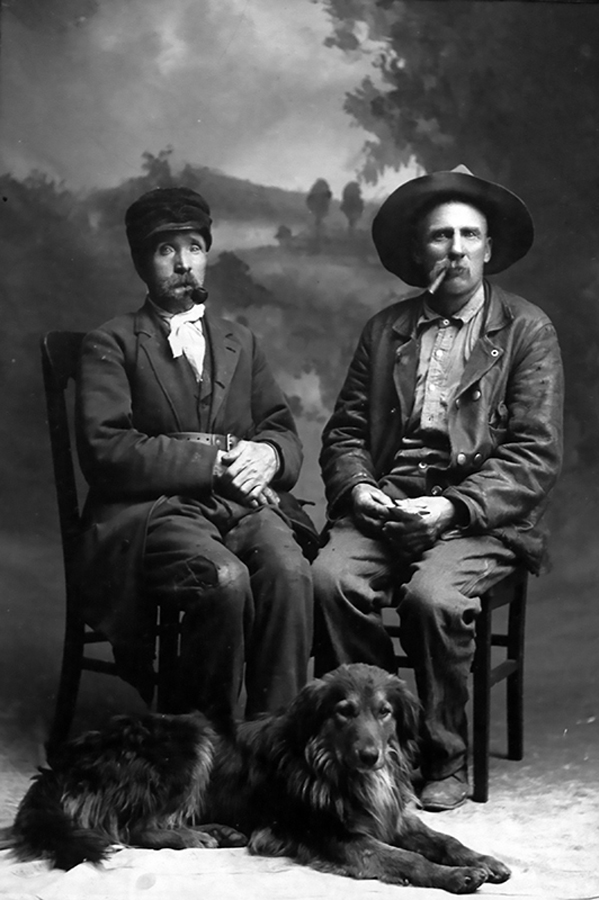
Patrick Doran and the Shamrock

856-Pat-Doran-and-friend-Dura

By the fall of 1867, Laramie was growing. The protection provided by Fort Sanders drew many people from all over, plus the businesses to serve them.

The first hotel built in Laramie was a long log cabin called the “Shamrock.” It was owned by Patrick Doran, who claimed to have walked west from Pine Bluffs, Wyoming (about 90 miles) with a group of friends. While his friends found work in the tie camps in the mountains, Doran opened the Shamrock – flop rooms in the back and meals in the front,  all served with Irish good cheer!

Learn more about Patrick Doran and the cultural impact of the Transcontinental Railroad.

Resources

Dawson Brothers Building

855-DAwsons-Dura
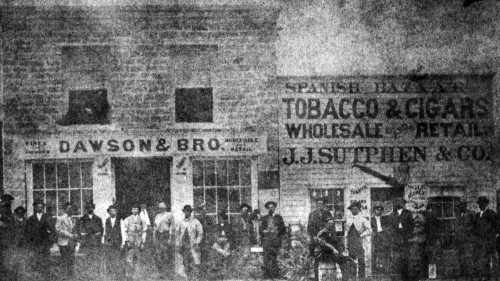
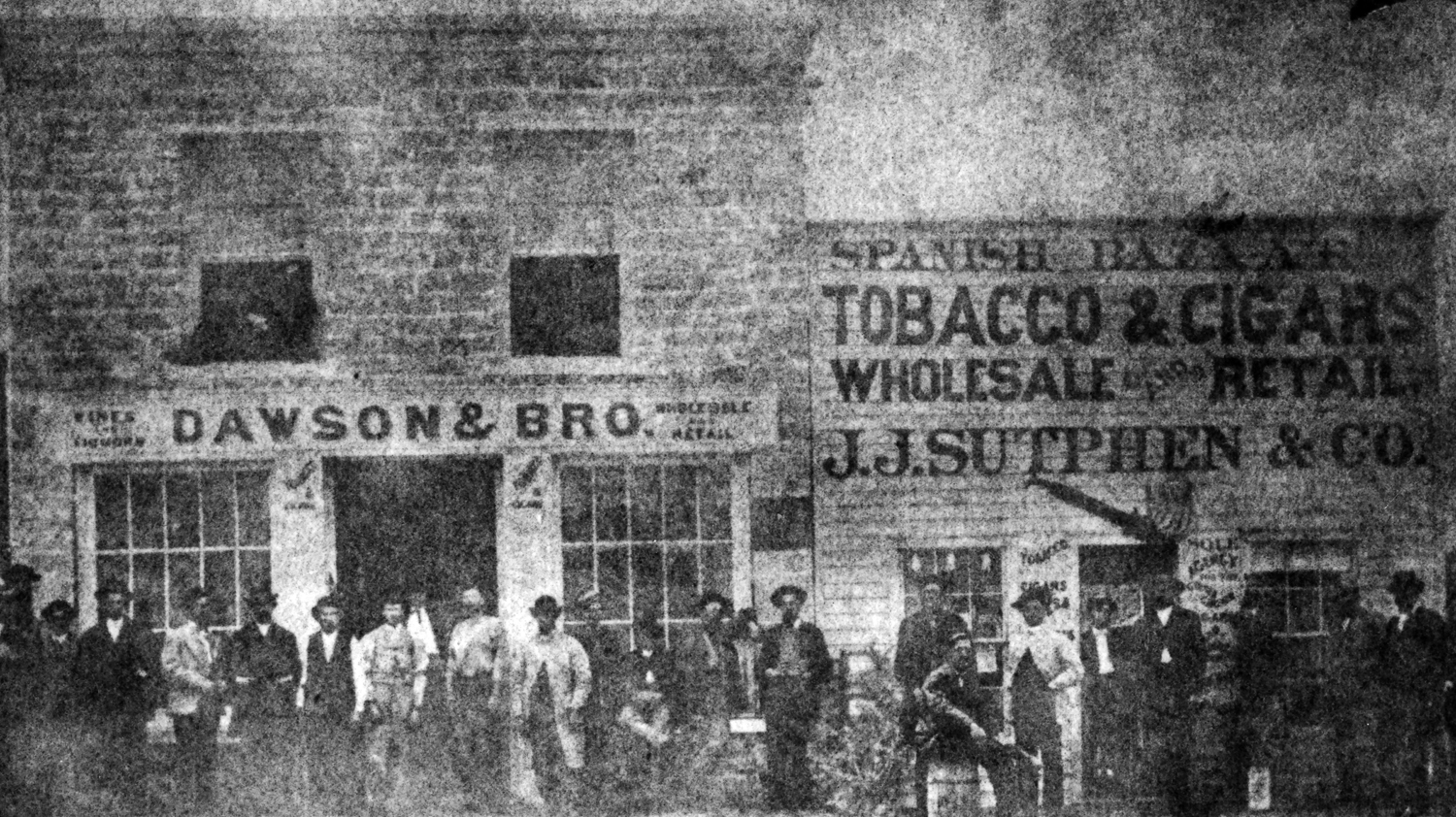
The Dawson Brothers building, located at 1869 South A. Street,  was the first substantial building to be built in Laramie. Built at a cost of $5,000, the Dawson Brothers building eventually becamse the the Kuster Hotel building, which served as a depot for the Ft. Collins and Walden Stage Line. Until the 1960s, it was also a depot for the Continental Trailways Bus Lines.

The building is now home to El Conquistador Mexican Restaurant and Sensuous She clothing store.

Learn more about the Dawson Brothers building.

Resources

Dr. John Finfrock

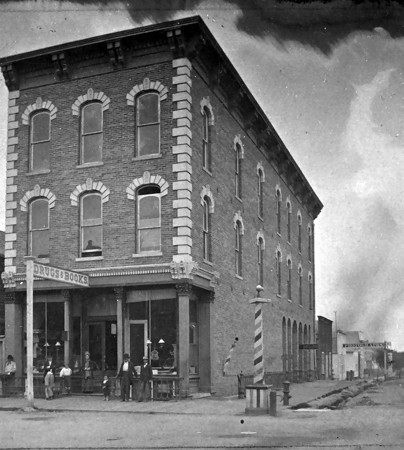
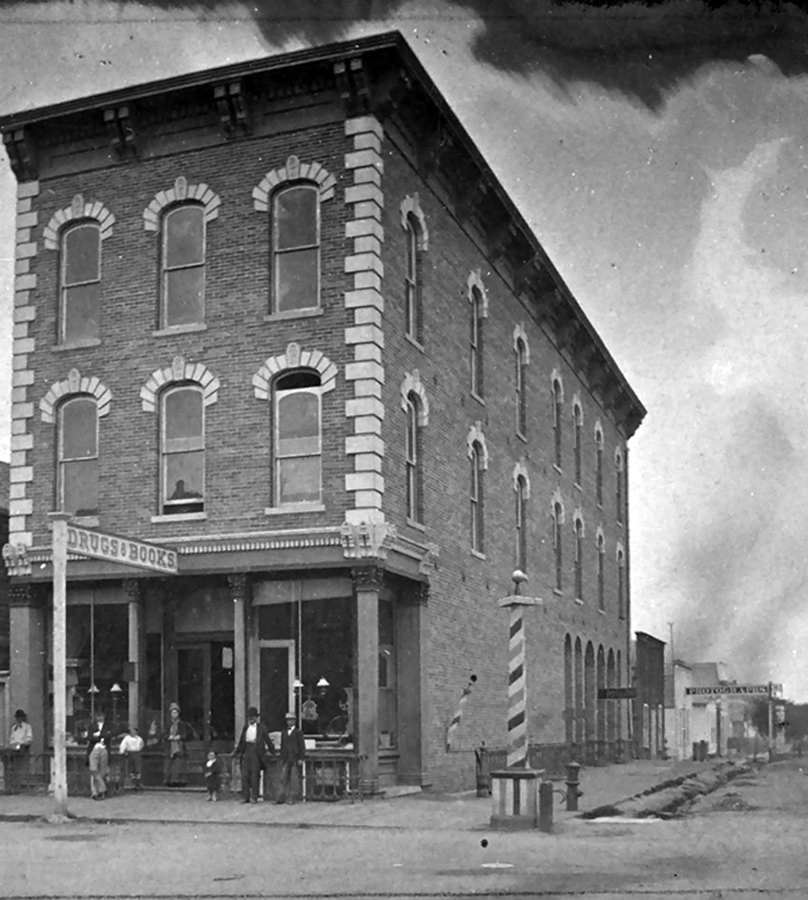
853-Dr-FinfrockDr. John Finfrock was an Army physician serving at Fort Sanders in the late 1860s when the Union Pacific Railroad came through Laramie. The new venture of the railroad inspired Finfrock to muster out of the Army and take a new position with UPRR managing their hospital. Finfrock continued to practice medicine and later opened the Eagle Pharmacy in Laramie. He also served as mayor of Laramie in the late 1880s and was one of the original trustees of the University of Wyoming.

In 1870, Dr. Finfrock housed the first collection of books from the newly-formed Wyoming Library and Literary Association at his offices on South A Street. What began with more than 1,000 books eventually led to the founding of the Albany County Public Library system with support from the Carnegie Foundation.

Learn more about Dr. John Finfrock. 

Resources

Laramie Philanthropists: Jane and Edward Ivinson

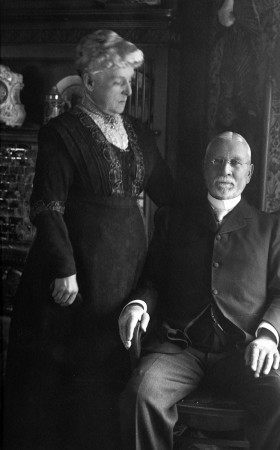
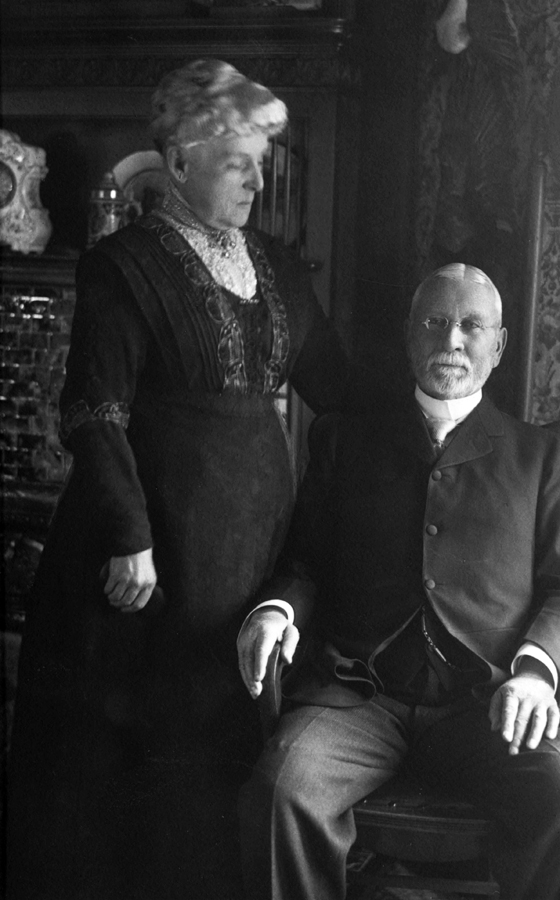
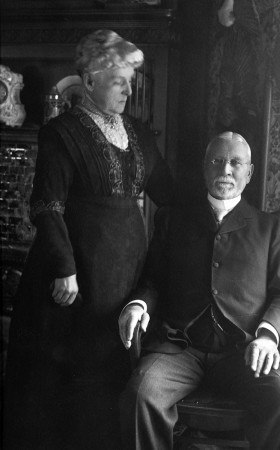
851-Ivinsons-DuraJane and Edward Ivinson were generous philanthropists dedicated to giving back to the Laramie community. (Photo courtesy of the Laramie Plains Museum.)

Dedicated Episcopalians, much of their generosity was directed toward the Episcopal Church in Laramie. Edward was the most generous local donor to the construction of St. Matthew’s Cathedral, which began in 1892. In 1916, he donated an additional $40,000 to complete the cathedral in his deceased wife’s name. Other gifts include a $50,000 contribution (equivalent to about $1 million today) and four city lots to construct Ivinson Memorial Hospital.

The Ivinsons led a lavish lifestyle that was often criticized, yet their legacy greatly benefitted Laramie and Albany County.

Learn more about the Ivinson legacy.

Resources

Ivinson Bank

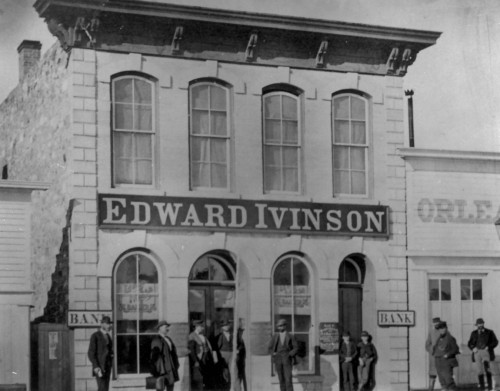
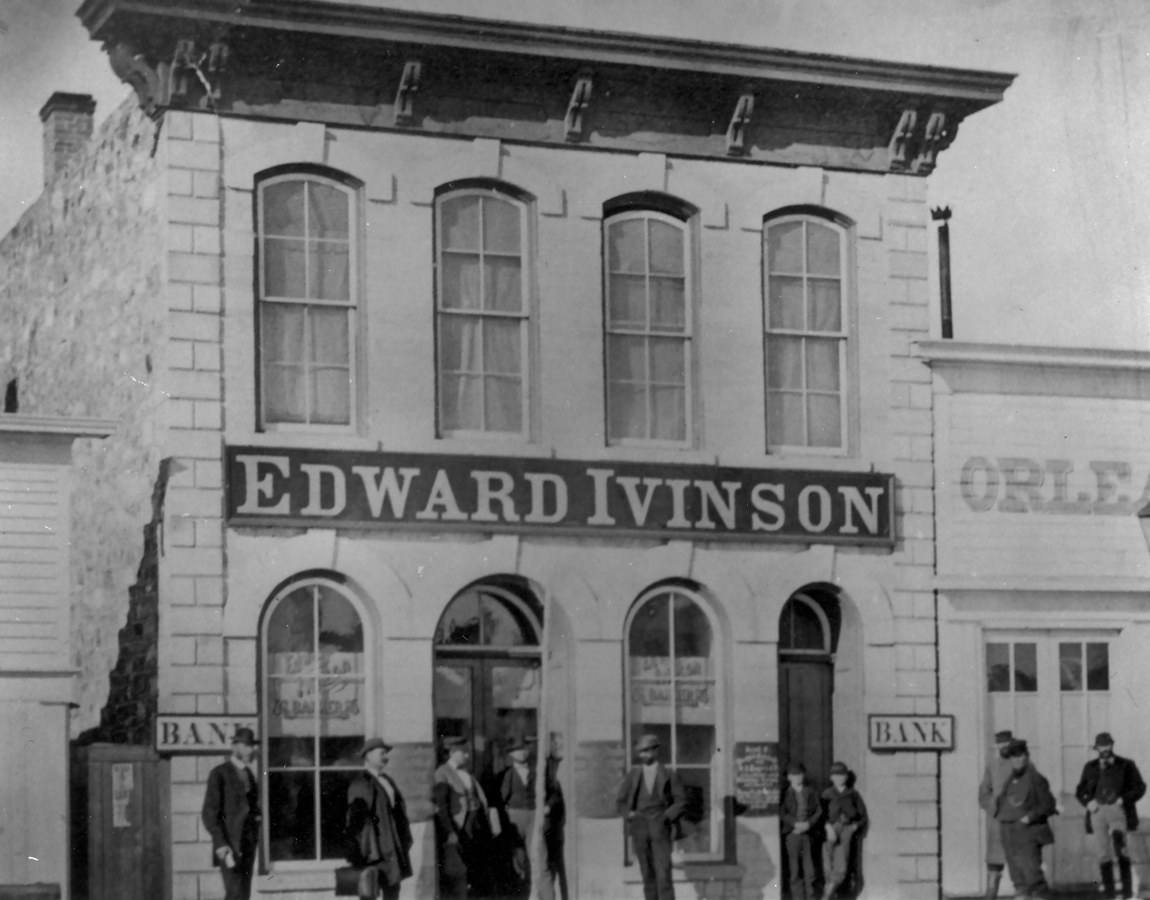
861-Sub-Neg-13701,-Edward-Ivinson-Bank,-Laramie-duraIn 1871, Edward Ivinson was already the owner of a successful dry goods store in Laramie when the opportunity to buy a bank presented itself.

Two years earlier, bankers H.J. Rogers and John Donnellan built Laramie’s first bank made with stone walls on 2nd street for $10,000. When the two ran into financial difficulties with their other business interests, they sold the bank to Posey S. Wilson for just $8,000; he then sold it to Ivinson for the same price only two months later.

Ivinson’s bank was a privately run institution for two years until he received a U.S. government charter to conduct business as the Wyoming National Bank of Laramie in 1873. He appointed his wife, Jane, to the bank’s board of directors. Throughout the years, other banks would challenge the Wyoming National Bank, but none of them posed any major threat to Ivinson. He sold his interest in the Wyoming National Bank in 1888.

Learn more about Edward Ivinson’s bank.

Resources


Edward Ivinson and the 1892 Wyoming Election

The year was 1892, and the Wyoming Republican Party was in trouble. Who better to run for governor than Edward Ivinson, a successful banker with enough cash to finance his own campaign?

However, just like in today’s long, drawn out and negative elections, the Democratic press in Wyoming “made mincemeat” of the inexperienced Ivinson, tying him to the Johnson County war. They also mocked him for his poor speaking abilities. Wherever they could, newspapers across Wyoming territory ridiculed Ivinson. Even his hometown publication, the Boomerang, likened his image to that of the devil. Worst of all, it printed mock ballots before the November election already filled in for Ivinson’s Democratic opponent, John Osborne.  Osborne won the election.

It would be many years before Edward Ivinson would set foot into the political arena once again. In 1918, Ivinson was elected mayor of Laramie. This time, however, the Boomerang had nothing but praise for the 88-year-old.

Learn more about Edward Ivinson and the gubernatorial election of 1892.

Resources


The Blue Front

850-The-blue-front-sm

The Blue Front, located on South Front Street, opened as a “Bucket of Blood” sort of saloon and was owned by Con Moyers, one of the men hung during the vigilante uprising of October 1868.

Later, the building became the National Theatre, where many plays and performances were staged. Laramie’s courtroom moved to the National Theatre to seat the world’s first female jurors after the locations where other court cases were held were deemed unsuitable for a proper woman to enter. Even then, it took a great deal of convincing that the theatre was respectable and safe. Justice Howe told the men and women of the jury he had “long seen that woman was a victim to the vices, crimes and immoralities of man, with no power to protect and defend herself from these evils.” Jury duty gave women “such powers of protection.”

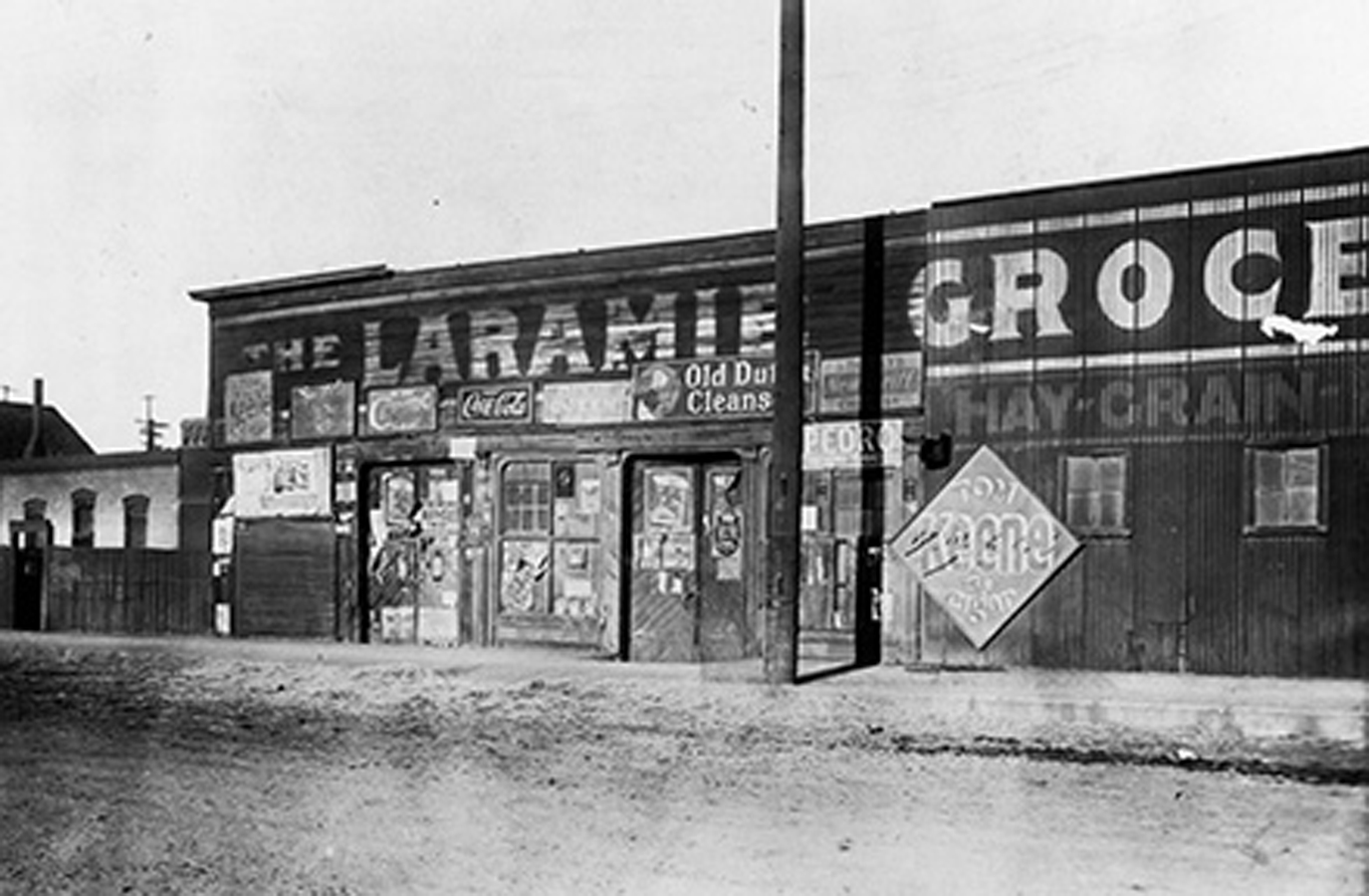
In 1869, Augustus Trabing moved his headquarters to Laramie in the old Blue Front Theatre. It was a one-story wooden structure that he painted a bright blue, hence the name Blue Front. When Trabing opened the Laramie Grocery Company at the corner of Garfield and South Second Street, the theatre was used as a warehouse.

Learn more about the history of the Blue Front.

Resources

Melville Brown: Laramie’s First Mayor

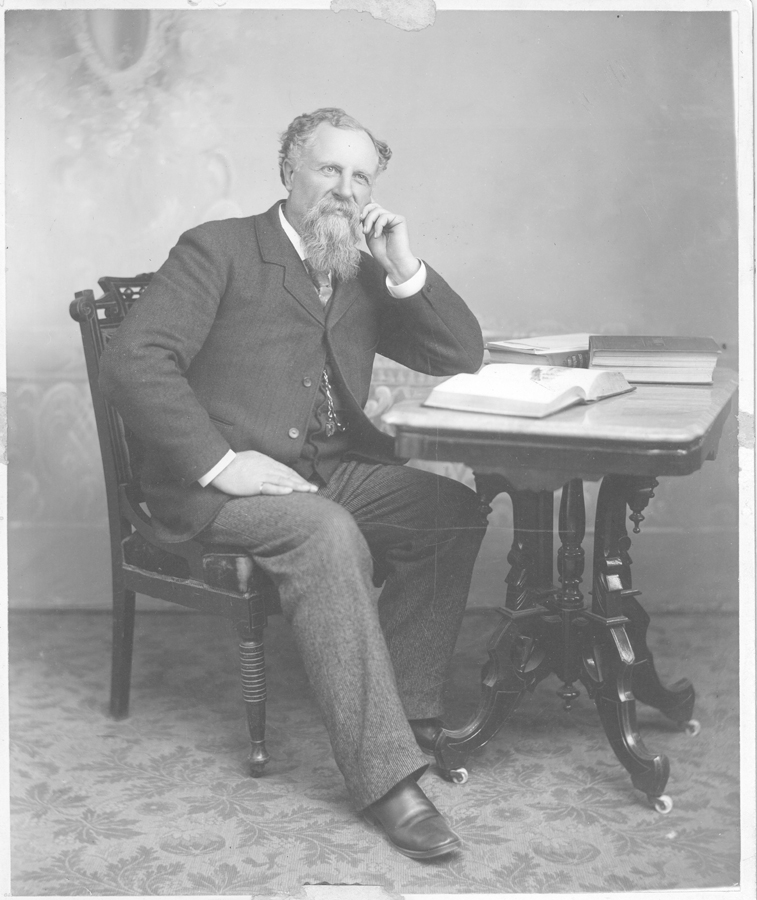
846-Sub-Neg-1489,-Judge-Melville-C.-Brown,-Albany-County

The Short Tenure of Laramie’s First Mayor
By
Kim Viner
Laramie Plains Museum
Seven city officials were selected by a group of townspeople at a meeting on May 2, 1868, but in subsequent weeks officers of the new government began resigning. The criminals thieved and killed and brazenly flouted any law or decency, without much to stop them. By autumn, the townsfolk were fed up, formed vigilance committees and took dramatic action on the night of Oct. 18 to round up and apply swift justice.

The first summer was turbulent, with little or no effective law enforcement.  Melville C. Brown was elected mayor, but he resigned after six weeks due to intimidation by the lawless element and his colleagues ineptitude. In the fall, a vigilance committee drove out the worst of the outlaws (a few hangings helped!) and the town settled down. One member of that vigilance committee was N. K. Boswell, who became the first sheriff in Albany County (1869).

The Short Tenure of Laramie’s First Mayor

It is a widely-repeated story that Laramie’s first mayor, Melville C. Brown, was elected on May 12, 1868 and resigned after three weeks in office because the town was “ungovernable.” But, is the story true?

Brown was born in Maine on August 18, 1838. At about age 20 he travelled to California to join his father, Enoch, in his mercantile and mining businesses. After four years there, he moved on to Idaho where he studied law, served in several local government positions and in the Idaho Territorial Legislature.

In October 1867, he moved to Cheyenne, Dakota Territory, to establish a law practice. After a short five months he decided to continue on to Laramie City. Most sources indicate the 30-year-old Brown arrived in Laramie on May 1, 1868.

Shortly thereafter, the events of the story noted above unfolded. While it sounds good, the truth is a bit more mundane. Brown’s own resignation letter which was published in Laramie’s Frontier Index on June 16, 1868 states:

“In consideration of the fact of the incompetency of many of the officers selected on the 2d of May, A.D. 1868, in conjunction with myself, and the incapacity and laxity of said officers in the discharge of their duties, I find it impossible for me to administer the city government in accordance with my views of the necessity of the case, and therefore thanking the people of the city of Laramie for honoring me with the highest position in their gift, and for their co-operation and in the somewhat difficult administration of a provisional city government, I respectfully tender my resignation.” The letter was dated June 12, 1868. The word “ungovernable” does not appear (but it does display a lawyer-like nearly unintelligible sentence).

Short articles in the Cheyenne Leader and Frontier Index papers also clearly indicate that Brown was elected to head the provisional government earlier than May 12, 1868, so he actually served a little over 5 weeks in office.

It appears that the well-known, but incorrect, story was first written by J.H. Triggs in an 1875 Laramie city directory. While Triggs’ other information is generally correct and supported by contemporary newspapers, in this case Triggs got it wrong. Unfortunately he does not give any information on his sources for dates or the reason Brown resigned. It is conceivable that Brown was bemoaning the other officers because they tried but could not deal effectively with the ongoing violence. But it seems more likely that, based on his own words, he felt they were just not capable of doing their jobs. So, he quit.

All sources agree that the citizens of Laramie gave up on any attempt to form a government for several months. It was not until October 1868 that another election was held with L.B. Chase chosen as mayor. In the interim the town was ruled over by a gang of “rowdies” who generally did as they pleased to ensure their unlawful and profitable activities were conducted without interruption.

Brown for his part remained in Laramie for many years and served in numerous government capacities, including as president of the Wyoming Constitutional Convention which convened in 1889; it drew up the first constitution for the new state. He left Laramie in 1900 when he was appointed by President McKinley to be a federal judge in Alaska. He resigned that post under somewhat mysterious circumstances in 1904 and moved to Seattle, Washington, to practice law. He returned to Laramie in late 1907 and recommenced his law practice. He remained in Laramie until his death on April 9, 1928.

Kim Viner, “The Short Tenure of Laramie’s First Mayor,” Volunteer at the Laramie Plains Museum